

Role of a Criminal Lawyer – Criminal allegations can affect liberty, reputation, employment, and family relationships. Therefore, immediate legal guidance becomes essential after an accusation or arrest. A criminal lawyer protects constitutional rights throughout investigation and trial stages. The lawyer examines facts, evidence, procedures, and statutory provisions carefully. Moreover, early intervention often prevents avoidable legal complications. Criminal matters may involve offences under the Bharatiya Nyaya Sanhita, 2023. Investigation procedures generally follow the Bharatiya Nagarik Suraksha Sanhita, 2023. Courts evaluate evidence according to the Bharatiya Sakshya Adhiniyam, 2023. Criminal lawyers represent accused persons before police authorities, Magistrate Courts, Sessions Courts, High Courts, and the Supreme Court. Effective defence strategies challenge unlawful actions and weak evidence. Rajendra Criminal Law Firm provides comprehensive legal support during investigations, bail proceedings, trials, appeals, and post-conviction remedies.
The Role of a Criminal Lawyer in Your Defence – Rajendra Criminal Law Firm
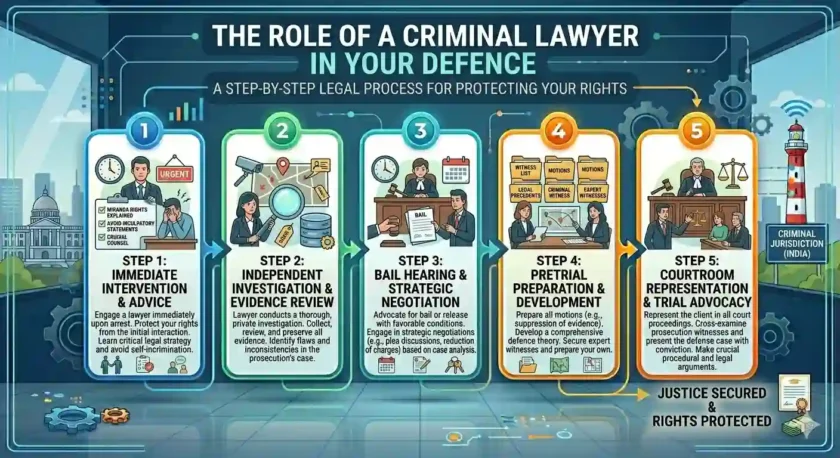
Why Early Criminal Defence Matters
Early legal assistance can significantly influence case outcomes. Consequently, accused persons should contact a criminal lawyer immediately. Lawyers guide clients during police questioning and investigation procedures. They explain legal rights and available remedies clearly. Furthermore, lawyers monitor procedural compliance by investigating agencies. Early case assessment identifies weaknesses within allegations and evidence. Criminal lawyers advise clients regarding statements, documents, and interactions with authorities. Strategic decisions during initial stages often shape future proceedings. Courts frequently examine whether investigators followed statutory safeguards. Legal representation helps prevent self-incriminating actions and procedural mistakes. Prompt intervention strengthens defence preparation and protects fundamental rights. Professional legal support also reduces uncertainty during stressful criminal proceedings.
Key Responsibilities of a Criminal Lawyer
Criminal lawyers perform several important functions throughout legal proceedings. Their role extends beyond courtroom appearances and arguments. Therefore, clients benefit from comprehensive legal representation.
| Responsibility | Purpose |
|---|---|
| Legal Advice | Protect rights |
| Bail Representation | Secure liberty |
| Evidence Review | Identify weaknesses |
| Trial Defence | Challenge allegations |
| Appeals | Correct errors |
Core responsibilities include:
- Case analysis.
- Witness preparation.
- Legal research.
- Defence strategy.
- Court representation.
Strong legal advocacy improves procedural fairness and defence effectiveness.
Legal Rights of an Accused Person
Every accused person enjoys important legal protections under Indian law. Therefore, authorities must respect procedural safeguards consistently. Individuals retain the right to legal representation and fair treatment. Investigating agencies must follow lawful arrest and detention procedures. Moreover, courts protect constitutional guarantees and due process rights. Lawyers ensure compliance with statutory requirements during investigations. Accused persons may challenge unlawful actions through appropriate remedies. Judicial oversight prevents misuse of investigative powers. Effective defence representation strengthens accountability and procedural fairness. Legal professionals explain rights regarding arrest, interrogation, and court proceedings. Understanding these protections helps individuals make informed decisions during criminal cases.
Criminal Investigations and Police Procedures
Police investigations often represent the first stage of criminal proceedings. Consequently, legal guidance becomes crucial during interactions with authorities. Lawyers advise clients before statements and document submissions. Investigators must follow procedures prescribed under applicable laws. Furthermore, unlawful methods may affect evidentiary reliability and admissibility. Criminal lawyers review investigation records and procedural compliance carefully. Nearby police stations frequently handle complaints, arrests, and preliminary inquiries. Legal professionals protect clients against procedural violations and unfair practices. Early monitoring helps identify legal defects within investigations. Effective defence strategies often emerge during this critical phase. Timely legal intervention preserves rights and strengthens future case preparation.
Bail Applications and Liberty Protection
Bail remains one of the most important criminal remedies. Liberty interests require immediate attention after arrest or detention. Therefore, criminal lawyers prepare strong bail applications promptly. Courts consider allegations, evidence, and statutory requirements carefully. Lawyers present facts supporting release and compliance assurances. Moreover, effective advocacy may secure anticipatory or regular bail. Bail proceedings often determine a client’s immediate circumstances. Legal professionals address prosecution objections and procedural concerns strategically. Well-prepared applications improve prospects for favourable orders. Judicial discretion operates within established legal principles. Skilled representation protects personal liberty while ensuring compliance with court directions.
Evidence Analysis and Defence Strategy
Evidence forms the foundation of every criminal case. Criminal lawyers examine documentary, digital, forensic, and oral evidence carefully. Consequently, weaknesses often emerge through detailed legal analysis.
Important review areas include:
- Witness statements.
- Digital records.
- Forensic reports.
- Investigation documents.
- Expert opinions.
Defence lawyers assess:
- Consistency.
- Authenticity.
- Reliability.
- Admissibility.
- Credibility.
Comprehensive review strengthens defence preparation and courtroom advocacy.
Role of BSA in Criminal Defence
The Bharatiya Sakshya Adhiniyam, 2023 governs evidentiary principles in criminal proceedings. Courts evaluate evidence according to statutory standards. Therefore, lawyers must understand admissibility requirements thoroughly. Defence counsel challenges unreliable and improperly obtained evidence. Furthermore, witness credibility often influences judicial findings significantly. Documentary and electronic records require careful scrutiny. Lawyers identify contradictions and procedural deficiencies effectively. Strong evidentiary analysis supports acquittal, discharge, or reduced liability. Courts rely heavily on legally admissible materials. Professional advocacy ensures proper application of evidentiary rules. Effective use of BSA provisions strengthens defence outcomes and procedural fairness.
Trial Representation Before Criminal Courts
Trial proceedings determine guilt or innocence through judicial evaluation. Consequently, skilled courtroom advocacy remains essential throughout the process. Criminal lawyers cross-examine witnesses and challenge prosecution evidence. Defence counsel presents legal arguments and supporting materials strategically. Moreover, lawyers protect procedural rights during hearings and examinations. Magistrate Courts and Sessions Courts hear different categories of offences. Judicial decisions depend upon evidence, law, and factual circumstances. Effective trial preparation improves credibility and defence strength. Legal professionals anticipate prosecution arguments and respond appropriately. Comprehensive representation enhances fairness and legal protection. Strong advocacy often influences case outcomes significantly.
Appeals, Revisions, and Post-Conviction Remedies
Criminal litigation may continue after trial judgments. Therefore, appellate remedies remain vital safeguards within the justice system. Lawyers evaluate judgments for legal and factual errors. Appeals challenge convictions, sentences, and adverse findings before higher courts. Furthermore, revision proceedings address jurisdictional and procedural irregularities. High Courts exercise supervisory powers over subordinate courts. Legal professionals prepare detailed grounds supporting appellate relief. Strategic review identifies errors affecting case outcomes. Effective appellate advocacy may secure acquittals, retrials, or sentence modifications. Post-conviction remedies protect against miscarriages of justice. Professional legal representation remains valuable throughout every litigation stage.
Common Criminal Legal Issues
Criminal lawyers handle diverse offences and legal disputes. Each matter requires customized defence strategies and procedural analysis. Consequently, experienced representation becomes highly valuable.
Common criminal matters include:
| Legal Issue | Forum |
|---|---|
| Assault Cases | Criminal Courts |
| Theft Allegations | Magistrate Courts |
| Fraud Cases | Sessions Courts |
| Cyber Offences | Special Courts |
| Economic Crimes | Competent Courts |
Additional issues include:
- Cheating allegations.
- Forgery claims.
- Criminal breach of trust.
- Cybercrime investigations.
- Financial offences.
Legal solutions depend upon case facts and statutory provisions.
Remedies Available in Criminal Proceedings
Indian criminal law provides several remedies protecting accused persons. These remedies ensure procedural fairness and judicial oversight. Therefore, lawyers evaluate appropriate options carefully.
Key remedies include:
- Anticipatory bail.
- Regular bail.
- Discharge petitions.
- Quashing petitions.
- Appeals.
Additional legal support may involve:
- Revision petitions.
- Writ proceedings.
- Settlement evaluation.
- Trial defence.
- Sentence challenges.
Strategic use of remedies strengthens defence positions and legal protection.
Why Choose Rajendra Criminal Law Firm
Rajendra Criminal Law Firm delivers focused criminal defence representation. Our team advises clients during investigations, arrests, trials, and appeals. We handle offences under BNS and related criminal statutes. Moreover, we appear before Magistrate Courts, Sessions Courts, High Courts, and the Supreme Court. Clients receive practical legal strategies tailored to specific allegations. We review evidence, prepare defence plans, and pursue available remedies diligently. Timely intervention often improves outcomes and protects legal rights. Professional advocacy strengthens procedural safeguards and courtroom representation. Rajendra Criminal Law Firm remains committed to protecting liberty, reputation, and justice through effective criminal defence services.
Frequently Asked Questions
FAQ 1: When should I hire a criminal lawyer?
You should seek legal advice immediately after allegations, arrest, summons, or police contact.
FAQ 2: Can a criminal lawyer help before arrest?
Yes. Lawyers may seek anticipatory bail and provide guidance during investigations.
FAQ 3: What does a criminal lawyer do during trial?
The lawyer challenges evidence, cross-examines witnesses, and presents defence arguments.
FAQ 4: Can a lawyer challenge an FIR?
Yes. Appropriate cases may permit quashing petitions before competent High Courts.
FAQ 5: What evidence helps a criminal defence?
Documents, digital records, witness testimony, and expert opinions often support defence strategies.
FAQ 6: Can a conviction be appealed?
Yes. Higher courts may review convictions, sentences, and legal errors through appeals.
Read More
- How to Handle a False Criminal Case: A Legal Strategy
- Section 420 IPC: Cheating and Fraud – Punishment & Defence
- What is Anticipatory Bail? Everything You Need to Know
- Legal Defences Against a Theft Charge in India
- How to File a Criminal Complaint in Chennai: A Step-by-Step Guide
- Ministry of Home Affairs