

Cheating and fraud allegations remain among the most frequently reported economic offences in India. Although Section 420 IPC governed such offences earlier, the Bharatiya Nyaya Sanhita now regulates criminal liability. Courts, however, still encounter searches using the phrase “Section 420 IPC.” Therefore, individuals, businesses, NRIs, and professionals require updated legal guidance. The offence generally involves dishonest inducement causing delivery of property or valuable security. Police stations often register FIRs after commercial, property, matrimonial, employment, or investment disputes. Rajendra Criminal Law Firm assists accused persons, complainants, companies, and NRIs throughout investigations and trials. Common allegations include: • Investment scams • Property fraud • Business deception • Online cheating • Loan fraud. Relevant authorities include police departments, cyber cells, economic offences wings, and criminal courts. Early legal intervention often prevents procedural complications and protects statutory rights.
Section 420 IPC: Cheating and Fraud – Punishment & Defence – Rajendra Criminal Law Firm
Essential Ingredients of a Cheating Offence
Courts examine specific legal ingredients before sustaining cheating allegations. Mere contractual breach does not automatically establish criminal intent. Moreover, dishonest intention must exist from the beginning of the transaction. Prosecutors must establish inducement, deception, and wrongful gain or loss. Rajendra Criminal Law Firm evaluates complaints and evidence before recommending legal strategies. Essential ingredients include:
| Ingredient | Importance |
|---|---|
| Deception | Fundamental |
| Dishonest Intention | Essential |
| Inducement | Mandatory |
| Property Delivery | Relevant |
| Wrongful Loss | Significant |
Therefore, courts distinguish civil disputes from criminal conduct carefully. Businesses often face false criminal complaints arising from contractual disagreements. Strong legal analysis helps identify weaknesses in allegations. Proper defence preparation significantly improves litigation outcomes before investigative agencies and courts.
Common Situations Leading to Section 420 Allegations
Cheating allegations arise across diverse commercial and personal transactions. Consequently, police authorities receive numerous complaints involving financial loss claims. Rajendra Criminal Law Firm represents clients in various fraud-related disputes. Frequently reported situations include: 1. Property sale disputes. 2. Employment fraud claims. 3. Business partnership disputes. 4. Online marketplace scams. 5. Investment scheme complaints. Investigators often review documents, communications, and financial records. Moreover, cybercrime units may become involved in digital fraud matters. Courts assess whether criminal intent existed during the initial transaction. Therefore, evidence preservation remains critical. Individuals should immediately secure contracts, emails, messages, invoices, and payment records. Early legal consultation often prevents avoidable admissions and procedural mistakes during investigations.
Punishment, Investigation, and Criminal Proceedings
Punishment and Consequences of Conviction
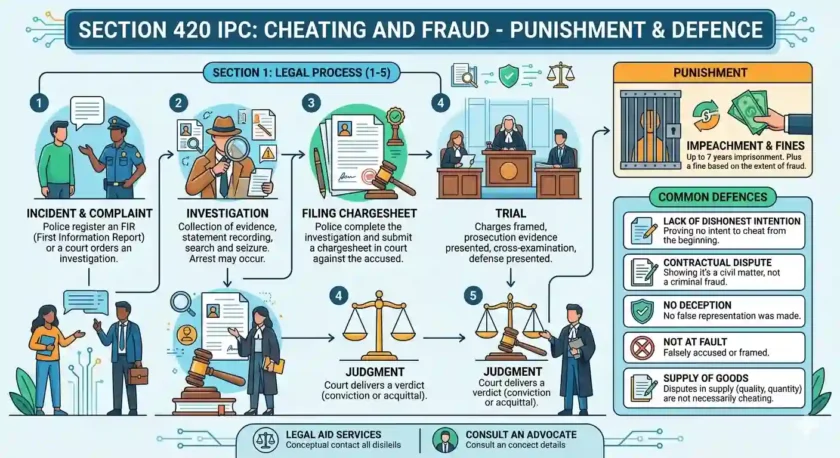
Conviction for cheating offences may result in severe legal consequences. Criminal penalties affect personal liberty, employment prospects, and business reputation. Moreover, accused persons may face parallel civil proceedings seeking financial recovery. Rajendra Criminal Law Firm provides defence representation at every stage. Potential consequences include: • Imprisonment • Monetary fines • Asset scrutiny • Travel restrictions • Reputational damage. Authorities may also examine related financial transactions. Therefore, accused persons should understand their legal position immediately after registration of an FIR. Courts evaluate evidence, witness testimony, and documentary records carefully. Effective defence strategies often challenge the prosecution’s ability to prove dishonest intention. Timely legal action therefore remains essential for protecting rights and minimizing long-term consequences.
FIR Registration and Police Investigation
Police stations generally commence investigations after receiving complaints alleging cheating or fraud. Officers record statements, collect documents, and verify transaction details. Moreover, cybercrime units may investigate online fraud allegations. Rajendra Criminal Law Firm assists clients during questioning and evidence collection. Common investigative steps include:
| Investigation Step | Purpose |
|---|---|
| Complaint Review | Preliminary Assessment |
| Witness Statements | Fact Verification |
| Document Collection | Evidence Gathering |
| Digital Analysis | Cyber Evidence |
| Arrest Consideration | Procedural Action |
Individuals should cooperate lawfully while protecting legal rights. Furthermore, legal representation reduces risks during interrogation. Prompt advice helps clients respond appropriately to notices, summons, and investigative requests.
Role of BNSS, BNS, and BSA in Fraud Cases
The Bharatiya Nyaya Sanhita, Bharatiya Nagarik Suraksha Sanhita, and Bharatiya Sakshya Adhiniyam now govern criminal proceedings. Therefore, fraud investigations follow updated statutory procedures. Rajendra Criminal Law Firm advises clients regarding modern criminal law requirements. Important areas include: 1. Investigation procedures. 2. Arrest safeguards. 3. Electronic evidence. 4. Witness examination. 5. Digital documentation. Courts increasingly rely upon electronic records in fraud prosecutions. Moreover, financial transactions often generate significant digital evidence. Proper understanding of BNS, BNSS, and BSA strengthens defence preparation. Strategic legal planning helps clients address procedural and evidentiary challenges effectively. Accurate compliance with procedural requirements also prevents avoidable complications.
Effective Defences Against Cheating Allegations
Absence of Dishonest Intention
Absence of dishonest intention represents a powerful defence in cheating prosecutions. Courts frequently examine the accused person’s intention during the transaction’s inception. Moreover, subsequent disputes alone rarely establish criminal liability. Rajendra Criminal Law Firm carefully analyzes factual circumstances before developing defence strategies. Useful defence materials include: • Contracts • Emails • Payment records • Correspondence • Settlement communications. Genuine commercial transactions often generate documentary evidence supporting innocence. Therefore, parties should preserve records immediately after disputes emerge. Courts regularly distinguish failed business ventures from criminal fraud. Strong documentation therefore becomes invaluable. Effective legal representation helps present facts clearly and challenge unsupported allegations before investigators and courts.
Civil Dispute Versus Criminal Offence
Many complaints arise from contractual or commercial disagreements rather than criminal conduct. Consequently, courts scrutinize whether complainants improperly use criminal proceedings for recovery purposes. Rajendra Criminal Law Firm frequently handles disputes involving overlapping civil and criminal issues. Important considerations include:
| Civil Issue | Criminal Issue |
|---|---|
| Contract Breach | Deception |
| Recovery Claim | Fraudulent Intent |
| Business Loss | Dishonest Gain |
| Payment Default | False Representation |
Therefore, lawyers often demonstrate the predominately civil nature of disputes. Courts may grant relief when criminal proceedings lack essential ingredients. Strategic litigation planning improves prospects of favorable outcomes. Proper legal analysis remains crucial before initiating defence actions.
Bail, Quashing, and Legal Remedies
Anticipatory Bail and Regular Bail
Arrest concerns often arise immediately after FIR registration. Therefore, accused persons frequently seek anticipatory bail or regular bail. Rajendra Criminal Law Firm provides urgent legal assistance in such matters. Available remedies include: • Anticipatory bail • Regular bail • Interim protection • Transit bail • Conditions modification. Courts consider allegations, evidence, and cooperation levels during bail hearings. Moreover, timely applications strengthen protection against coercive action. Legal representation helps present mitigating circumstances effectively. Early preparation frequently improves the chances of obtaining favorable orders. Immediate consultation remains advisable whenever criminal proceedings appear imminent.
Quashing Petitions and Constitutional Remedies
High Courts possess authority to examine abusive or legally unsustainable prosecutions. Consequently, accused persons may seek quashing of FIRs and proceedings. Rajendra Criminal Law Firm evaluates case records before recommending such remedies. Common grounds include: 1. Absence of offence ingredients. 2. Civil dispute character. 3. Settlement between parties. 4. Abuse of legal process. 5. Lack of evidence. Courts carefully assess allegations and supporting materials. Furthermore, constitutional remedies remain available in appropriate circumstances. Strong pleadings and documentation significantly enhance prospects of success. Strategic litigation therefore plays a vital role in fraud-related defence.
Why Choose Rajendra Criminal Law Firm
Comprehensive Criminal Defence and Fraud Litigation Services
Fraud and cheating allegations require prompt, strategic, and knowledgeable legal representation. Rajendra Criminal Law Firm provides comprehensive support throughout investigations, trials, and appellate proceedings. Moreover, the firm assists individuals, businesses, professionals, companies, and NRIs nationwide. Legal services include: • FIR defence • Bail representation • Quashing petitions • Trial advocacy • Appeals and revisions. Lawyers appear before police authorities, cybercrime cells, magistrate courts, sessions courts, High Courts, and the Supreme Court. CPC-related civil remedies may also arise alongside criminal litigation. Therefore, integrated legal strategies often deliver better outcomes. Experienced counsel helps protect liberty, reputation, and financial interests. Effective representation frequently reduces risks while strengthening defence opportunities.
Frequently Asked Questions
FAQ 1: Is every breach of contract a cheating offence?
No. Courts require proof of dishonest intention from the transaction’s beginning. Mere breach usually remains a civil matter.
FAQ 2: Can police arrest immediately in cheating cases?
Arrest depends upon facts, evidence, and legal requirements. Timely legal advice helps protect procedural rights.
FAQ 3: Can a cheating FIR be quashed?
Yes. High Courts may quash proceedings lacking legal merit or involving predominantly civil disputes.
FAQ 4: What evidence commonly supports a defence?
Contracts, emails, payment records, messages, invoices, and business correspondence often support defence arguments.
FAQ 5: Can NRIs seek protection in fraud cases?
Yes. NRIs may pursue bail, quashing, and other remedies through appropriate legal representation.
FAQ 6: Which courts hear cheating and fraud matters?
Magistrate Courts, Sessions Courts, High Courts, and the Supreme Court may hear related proceedings.