

Civil and Criminal Law – Indian law divides disputes into civil matters and criminal offences based upon rights violations, public harm, and legal consequences involved. Therefore, individuals should understand procedural differences before approaching courts, tribunals, or police authorities regarding legal disputes. Rajendra Criminal Law Firm advises clients regarding criminal complaints, civil recovery suits, constitutional remedies, and dispute resolution mechanisms carefully. Our lawyers represent parties before civil courts, Magistrate Courts, Sessions Courts, tribunals, and constitutional forums across jurisdictions. Moreover, clients receive strategic guidance regarding police complaints, injunction applications, bail proceedings, and compensation claims during litigation. Civil law generally addresses private disputes involving contracts, property rights, family matters, and financial recovery claims between parties. However, criminal law punishes offences affecting public order, personal safety, and social stability through statutory penal provisions. We further assist clients regarding mediation proceedings, settlement negotiations, and appellate remedies during complex litigation matters. Effective legal representation protects constitutional rights while ensuring procedural fairness before judicial authorities.
Difference Between Civil and Criminal Law in India – Rajendra Criminal Law Firm
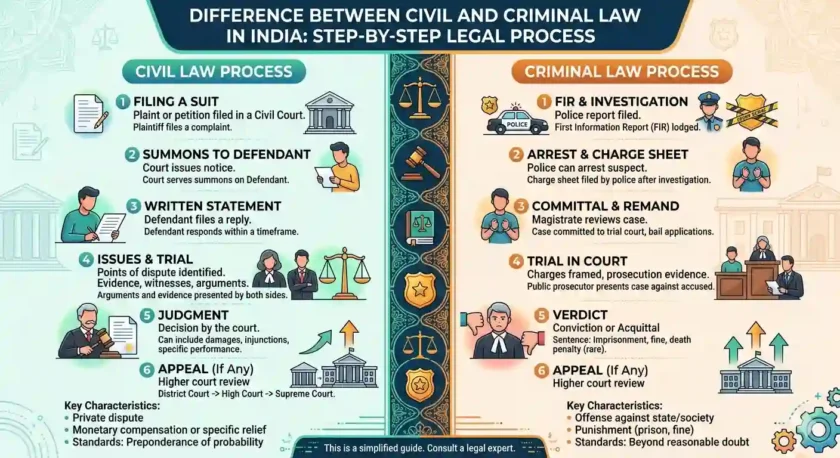
Nature and Purpose of Civil and Criminal Laws
Civil law primarily resolves private disputes through compensation, injunctions, declarations, and enforcement of contractual or property related rights effectively. Consequently, affected parties usually initiate proceedings before civil courts or specialized tribunals seeking financial or equitable relief measures. Rajendra Criminal Law Firm handles property disputes, recovery suits, family litigation, and commercial conflicts before competent forums strategically. Our lawyers draft plaints, written statements, and interim applications supporting client claims during civil proceedings carefully. Moreover, clients receive guidance regarding mediation, arbitration, and execution proceedings involving civil decrees and settlement enforcement. Criminal law, however, aims to punish offenders through imprisonment, fines, and statutory penalties protecting societal order and public security. Police authorities generally investigate criminal complaints involving assault, cheating, cybercrime, theft, fraud, and organized criminal activities. We therefore coordinate defence strategies, anticipatory bail remedies, and trial preparation during criminal investigations and prosecutions. Strong legal representation frequently safeguards liberty, reputation, and financial interests.
Key Differences Between Civil and Criminal Proceedings
Civil and criminal cases differ regarding procedural rules, burden of proof, remedies, and investigation mechanisms under Indian legal frameworks significantly. Therefore, litigants should understand jurisdictional distinctions before filing suits, complaints, or appeals before competent judicial authorities.
| Civil Law | Criminal Law | Primary Remedy |
|---|---|---|
| Contract disputes | Assault and violence | Compensation or punishment |
| Property litigation | Theft and robbery | Recovery or imprisonment |
| Divorce proceedings | Domestic violence offences | Injunction or prosecution |
| Recovery suits | Financial fraud | Damages or criminal trial |
| Consumer disputes | Cybercrime offences | Compensation or conviction |
Moreover, civil disputes usually begin through private filings, whereas criminal matters generally involve police investigations and prosecution authorities. Rajendra Criminal Law Firm carefully analyses jurisdiction, evidence, and statutory provisions before initiating appropriate legal proceedings strategically.
Courts and Forums Handling Civil Matters
Civil disputes proceed before several judicial forums depending upon dispute value, subject matter, and territorial jurisdiction under applicable procedural laws. Consequently, litigants require experienced legal representation for protecting rights and securing effective remedies during civil proceedings.
- District Civil Courts
- Commercial Courts
- Family Courts
- Consumer Disputes Commissions
- Debt Recovery Tribunals
- Real Estate Regulatory Authorities
- High Courts exercising civil jurisdiction
- Supreme Court of India
Moreover, arbitration centres, mediation forums, and Lok Adalats frequently resolve civil disputes through negotiated settlement mechanisms effectively. Rajendra Criminal Law Firm represents individuals, companies, NGOs, and NRIs during contractual, financial, and property litigation matters strategically. However, delayed filings and incomplete documentation often weaken legitimate civil claims before adjudicating authorities.
Criminal Courts and Investigation Authorities
Criminal proceedings involve police investigations, prosecution agencies, and judicial scrutiny under penal laws governing offences affecting public order and safety. Therefore, accused persons and complainants should understand procedural safeguards before participating in criminal investigations and trial proceedings.
Rajendra Criminal Law Firm handles criminal defence, prosecution assistance, and constitutional remedies before criminal courts and investigative agencies efficiently. Our lawyers represent clients before Magistrate Courts, Sessions Courts, Special Courts, and appellate criminal forums strategically. Moreover, clients receive support regarding anticipatory bail, regular bail, quashing petitions, and discharge applications during criminal litigation. Criminal investigations frequently involve nearby police stations, cybercrime cells, narcotics authorities, and economic offences wings handling specialized offences. However, constitutional protections and procedural safeguards restrict arbitrary arrest, unlawful detention, and coercive investigative practices significantly. We therefore challenge procedural irregularities, illegal seizures, and evidentiary violations before competent constitutional forums consistently. Effective criminal defence frequently protects liberty, dignity, and professional reputation during investigations.
Burden of Proof in Civil and Criminal Cases
Civil and criminal litigation require different evidentiary standards because legal consequences and constitutional protections vary significantly across proceedings. Consequently, parties should understand evidentiary burdens before presenting claims, witness testimony, and documentary records before judicial authorities.
Civil courts generally decide disputes using the preponderance of probabilities standard while evaluating contractual and factual evidence carefully. Criminal courts, however, require proof beyond reasonable doubt before convicting accused persons during prosecution proceedings and criminal trials. Rajendra Criminal Law Firm prepares documentary compilations, witness examinations, and electronic evidence supporting client cases strategically. Moreover, clients receive guidance regarding forensic reports, digital records, and expert testimony affecting litigation outcomes before courts. Civil disputes often involve financial documents, agreements, and property records supporting ownership or contractual claims between parties. However, criminal proceedings usually rely upon police investigations, witness statements, medical reports, and forensic analysis establishing criminal liability. We therefore implement structured evidentiary strategies for protecting client interests during judicial proceedings effectively.
Role of CPC in Civil Litigation Proceedings
The Code of Civil Procedure governs pleadings, injunctions, execution proceedings, appeals, and procedural fairness during civil litigation matters across jurisdictions. Therefore, litigants should understand procedural timelines and documentary requirements before initiating civil suits and recovery proceedings effectively. Rajendra Criminal Law Firm drafts plaints, interim applications, and execution petitions concerning property disputes and contractual claims strategically. Our lawyers seek injunctions, declarations, and compensation orders before civil courts and commercial tribunals carefully. Moreover, clients receive representation regarding attachment proceedings, execution disputes, and appellate remedies affecting civil decree enforcement significantly. Civil litigation frequently involves procedural objections, jurisdictional disputes, and documentary inconsistencies requiring careful legal analysis during hearings. However, timely filings and organized evidence significantly improve adjudicatory outcomes before judicial forums and appellate authorities. We therefore maintain procedural compliance and evidentiary consistency throughout litigation proceedings strategically. Effective civil advocacy frequently secures compensation and protects proprietary rights.
BNSS Procedures Governing Criminal Investigations
The Bharatiya Nagarik Suraksha Sanhita regulates arrest procedures, investigations, bail hearings, and trial processes during criminal litigation across India. Consequently, accused persons require immediate legal assistance after police complaints, summons, or detention proceedings affecting personal liberty significantly. Rajendra Criminal Law Firm advises clients regarding FIR registration, anticipatory bail, and procedural safeguards during criminal investigations strategically. Our lawyers monitor police actions, statement recording, and electronic evidence collection during criminal proceedings carefully. Moreover, clients receive support concerning remand hearings, search warrants, and seizure proceedings before criminal courts and investigating authorities. Criminal complaints frequently involve cybercrime police stations, economic offences wings, and narcotics control agencies handling specialized investigations. However, procedural violations and unlawful detention practices often justify constitutional remedies before High Courts and appellate forums. We therefore challenge arbitrary investigations, illegal arrests, and custodial misconduct through structured litigation strategies consistently. Strong criminal defence frequently safeguards constitutional rights and prevents unjust prosecution.
BNS Offences and Criminal Liability Standards
The Bharatiya Nyaya Sanhita defines offences involving assault, cheating, homicide, cybercrime, criminal intimidation, and financial fraud affecting public order substantially. Therefore, complainants and accused persons should understand offence classifications and statutory punishments before pursuing criminal remedies strategically. Rajendra Criminal Law Firm handles criminal complaints, trial defence, and appellate proceedings concerning serious penal offences efficiently. Our lawyers analyse witness statements, forensic reports, and electronic communication supporting prosecution or defence claims carefully. Moreover, clients receive guidance regarding plea bargaining, settlement possibilities, and sentencing considerations during criminal proceedings and appellate litigation. Criminal liability generally depends upon intention, knowledge, negligence, and factual circumstances surrounding alleged unlawful conduct significantly. However, false accusations and fabricated evidence frequently create serious reputational and financial consequences for accused persons. We therefore implement detailed defence strategies challenging unreliable testimony and procedural irregularities during criminal trials effectively. Strong advocacy frequently protects liberty and professional standing.
Bharatiya Sakshya Adhiniyam and Evidence Rules
The Bharatiya Sakshya Adhiniyam governs admissibility standards for oral testimony, documentary evidence, and electronic records during judicial proceedings effectively. Consequently, litigants should preserve records carefully before initiating civil suits, criminal complaints, or constitutional litigation matters before courts. Rajendra Criminal Law Firm advises clients regarding digital evidence certification, witness preparation, and forensic authentication requirements strategically. Our lawyers challenge manipulated documents, fabricated records, and unlawful evidence collection during contested proceedings carefully. Moreover, clients receive representation concerning electronic communication, CCTV footage, and financial transaction trails supporting litigation claims before courts. Civil disputes frequently involve agreements, invoices, and ownership documents requiring authentication under evidentiary laws and procedural rules. However, criminal trials generally depend upon witness testimony, forensic analysis, and police documentation establishing offence commission conclusively. We therefore coordinate with forensic professionals for ensuring evidentiary compliance and litigation readiness strategically. Effective evidentiary planning frequently improves judicial outcomes and procedural fairness.
Police Powers and Constitutional Safeguards
Police authorities investigate criminal offences, maintain public order, and collect evidence supporting prosecution proceedings before criminal courts effectively. Therefore, individuals should understand constitutional protections against unlawful arrest, custodial violence, and procedural abuse during investigations strategically. Rajendra Criminal Law Firm assists clients regarding police complaints, arrest procedures, and constitutional remedies before competent forums efficiently. Our lawyers challenge illegal detention, coercive interrogation, and unlawful surveillance through writ petitions and criminal proceedings carefully. Moreover, clients receive support regarding human rights violations, custodial misconduct, and electronic evidence preservation during police investigations. Nearby police stations frequently register complaints involving assault, domestic violence, cheating, cybercrime, and financial fraud allegations against individuals. However, police powers remain subject to judicial scrutiny and procedural safeguards under constitutional and criminal procedural laws consistently. We therefore seek bail relief, compensation remedies, and disciplinary action against unlawful investigative conduct strategically. Strong legal intervention frequently protects personal liberty and procedural fairness.
Civil Remedies Available Under Indian Laws
Civil law provides several remedies protecting contractual rights, property interests, commercial relationships, and personal entitlements during disputes between parties effectively. Consequently, litigants should evaluate available remedies carefully before initiating suits or settlement negotiations before competent judicial authorities.
- Permanent and temporary injunctions
- Recovery of money claims
- Specific performance decrees
- Partition and property declarations
- Consumer compensation proceedings
- Matrimonial and custody remedies
- Commercial arbitration awards
- Execution and attachment proceedings
Moreover, civil courts frequently encourage mediation and negotiated settlements for reducing prolonged litigation and commercial uncertainty significantly. Rajendra Criminal Law Firm develops customized litigation strategies after analysing evidence, jurisdiction, and statutory rights carefully. However, procedural delays and improper pleadings often reduce opportunities for effective civil relief.
Criminal Remedies and Punishments in India
Criminal law imposes punishments protecting public order, national security, and individual safety against unlawful conduct and organized criminal activities effectively. Therefore, complainants and accused persons should understand criminal remedies before approaching police authorities or criminal courts strategically.
Rajendra Criminal Law Firm handles prosecution support, criminal defence, and appellate remedies involving serious penal offences efficiently. Our lawyers seek anticipatory bail, discharge orders, acquittal remedies, and constitutional protection during criminal proceedings carefully. Moreover, clients receive representation regarding victim compensation, witness protection, and sentencing mitigation before criminal courts consistently. Criminal remedies frequently include imprisonment, fines, community service, confiscation, and probation depending upon offence gravity and statutory provisions. However, constitutional protections ensure fair investigation, legal representation, and judicial scrutiny during every criminal proceeding and appellate process. We therefore prepare structured defence strategies, evidentiary objections, and constitutional challenges protecting client interests comprehensively. Effective criminal advocacy frequently safeguards liberty and procedural fairness.
Civil and Criminal Law in Family Disputes
Family disputes often involve both civil remedies and criminal allegations because matrimonial conflicts affect personal rights and public safety simultaneously. Consequently, parties require coordinated legal strategies during divorce proceedings, domestic violence complaints, and maintenance litigation before courts effectively. Rajendra Criminal Law Firm represents spouses during family litigation, domestic violence proceedings, and criminal complaints strategically. Our lawyers handle divorce petitions, maintenance claims, child custody disputes, and criminal defence involving matrimonial allegations carefully. Moreover, clients receive support regarding mediation proceedings, settlement negotiations, and constitutional remedies affecting family relationships and financial rights. Family disputes frequently involve overlapping issues concerning property ownership, emotional abuse, and financial dependency requiring comprehensive legal planning. However, false allegations and procedural misuse sometimes create severe emotional and reputational consequences during matrimonial litigation matters. We therefore balance civil negotiations with criminal defence strategies during contested family disputes consistently. Effective representation frequently protects parental rights and personal dignity.
Commercial Disputes and Financial Crime Investigations
Commercial conflicts sometimes involve civil recovery claims alongside criminal allegations concerning fraud, breach of trust, and financial misappropriation affecting businesses adversely. Therefore, companies should pursue coordinated legal remedies before civil courts, tribunals, and criminal investigation agencies strategically. Rajendra Criminal Law Firm handles recovery suits, arbitration proceedings, and economic offence litigation concerning corporate disputes efficiently. Our lawyers represent companies before commercial courts, debt recovery tribunals, and economic offences wings during financial investigations carefully. Moreover, clients receive guidance regarding shareholder disputes, cyber fraud complaints, and contractual breach litigation affecting business continuity significantly. Commercial disputes frequently involve forged invoices, digital fraud, and unauthorized fund diversion creating simultaneous civil and criminal liability risks. However, structured legal intervention often prevents reputational damage and strengthens recovery opportunities during ongoing investigations and litigation. We therefore coordinate forensic analysis, evidentiary preservation, and strategic negotiations throughout commercial disputes consistently. Strong advocacy frequently protects business interests and financial stability.
Why Legal Representation Matters in Both Proceedings
Civil and criminal litigation require specialized legal knowledge, procedural expertise, and strategic advocacy before courts, tribunals, and investigative authorities effectively. Consequently, experienced representation significantly improves litigation outcomes and protects constitutional rights during complex legal disputes consistently. Rajendra Criminal Law Firm provides integrated support involving civil suits, criminal defence, constitutional remedies, and appellate litigation efficiently. Our lawyers collaborate with forensic professionals, financial experts, and senior advocates during complicated litigation matters strategically. Moreover, clients receive practical guidance regarding evidence preservation, procedural compliance, and settlement opportunities affecting dispute resolution outcomes significantly. Legal disputes frequently create financial stress, reputational concerns, and emotional pressure for individuals, companies, NGOs, and NRIs alike. However, timely legal intervention often reduces litigation risks and encourages favourable settlement opportunities before judicial authorities. We therefore prioritize preventive advisory services, strong courtroom advocacy, and strategic litigation planning for every client consistently. Effective representation frequently safeguards rights, reputation, and long term legal interests.
Frequently Asked Questions
What distinguishes civil law from criminal law in India?
Civil law resolves private disputes through compensation, while criminal law punishes offences affecting public order and societal safety.
Which courts handle civil disputes in India?
Civil Courts, Family Courts, Commercial Courts, Consumer Forums, and High Courts commonly handle civil litigation matters across jurisdictions.
Can one dispute involve both civil and criminal proceedings?
Property fraud, cheque bounce disputes, and matrimonial conflicts often create simultaneous civil claims and criminal investigations legally.
What laws govern criminal investigations and trials currently?
BNS, BNSS, and Bharatiya Sakshya Adhiniyam regulate criminal offences, investigations, evidence, and trial procedures across India.
Do police investigate civil disputes directly?
Police usually investigate criminal offences only. Civil disputes generally proceed before courts, tribunals, or alternative dispute forums.
Why should parties seek early legal representation during disputes?
Early legal advice improves evidence preservation, procedural compliance, and strategic planning during civil and criminal litigation matters.
Read More
- Can an FIR be Quashed by the High Court? Here’s How
- What is the Punishment for Assault under the IPC?
- Murder & Attempt to Murder Charges in India: Laws & Defences
- Quashing of FIR in Chennai: A Guide to Section 482 CrPC
- A Guide to Domestic Violence Cases under IPC 498A
- Department of Justice, Government of India