

Punishment for Assault – India criminalizes assault through several penal provisions. Earlier, the law operated under the Indian Penal Code. Presently, the Bharatiya Nyaya Sanhita governs criminal offences. Courts now apply BNS provisions for recent offences. However, older matters still involve IPC references. Therefore, litigants often search both statutes during criminal proceedings. Assault includes threats, physical attacks, intimidation, criminal force, and violent conduct. Police stations register offences after receiving complaints or emergency information. Furthermore, magistrates examine evidence under the Bharatiya Nagarik Suraksha Sanhita. Evidence appreciation occurs through the Bharatiya Sakshya Adhiniyam. Criminal lawyers assist accused persons, victims, companies, and families during investigations. Consequently, timely legal guidance prevents wrongful arrest and procedural mistakes. Common legal forums include Magistrate Courts, Sessions Courts, High Courts, and the Supreme Court of India. Assault cases frequently involve bail, anticipatory bail, FIR quashing, settlement discussions, and compensation claims.
What is the Punishment for Assault under the IPC? – Rajendra Criminal Law Firm
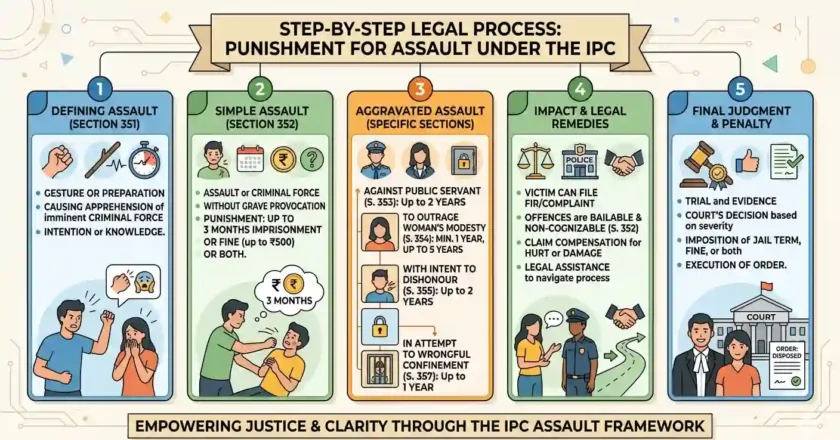
Key Elements of Assault Offences
Indian criminal law distinguishes assault from serious bodily offences. Therefore, punishment depends upon injury severity, intention, weapons, and victim status. Simple assault attracts lighter punishment than grievous hurt offences. Moreover, repeat offenders may face stricter judicial scrutiny during sentencing hearings. Police authorities evaluate witness statements, medical reports, CCTV recordings, and digital communications. Courts also examine motive, provocation, and premeditated conduct before conviction. Important legal ingredients usually include the following points:
- Intention to threaten or apply criminal force.
- Knowledge regarding likely bodily injury consequences.
- Physical act causing fear or actual violence.
- Presence of unlawful aggression or intimidation.
- Use of dangerous weapons or coordinated attacks.
Additionally, courts consider whether assault occurred within workplaces, public roads, homes, or educational institutions. Domestic assault allegations often involve family disputes and protection orders. Cyber threats combined with physical intimidation may attract additional offences. Consequently, experienced criminal advocates prepare defence strategies using medical inconsistencies and procedural violations. Strategic representation significantly improves bail prospects and trial outcomes.
Punishment for Simple Assault in India
Simple assault generally involves minor physical aggression without grievous injury. Earlier, IPC Section 352 governed punishment for assault or criminal force. Presently, equivalent BNS provisions regulate such conduct. Usually, courts impose imprisonment, fines, or both depending upon circumstances. Punishment may extend to several months for first-time offenders. However, aggravating factors increase sentencing severity considerably. Police commonly register non-grievous assault complaints after neighborhood disputes or workplace altercations. Furthermore, political clashes and road rage incidents frequently produce simple assault allegations. Magistrates assess medical certificates before framing criminal charges. Therefore, prompt medical examination becomes crucial for both complainants and accused persons. Criminal defence lawyers challenge false allegations through witness contradictions and forensic inconsistencies. Many disputes also reach mediation or settlement stages. Consequently, compromise petitions sometimes reduce litigation burdens before criminal courts. Victims may additionally pursue compensation remedies through civil proceedings under applicable laws.
Difference Between Assault and Criminal Force
Indian criminal jurisprudence separates assault from criminal force conceptually. Assault involves creating apprehension of immediate harm. Conversely, criminal force requires actual physical contact or unlawful force application. Therefore, courts examine factual circumstances carefully before determining applicable offences. Important distinctions include the following aspects:
| Legal Aspect | Assault | Criminal Force |
|---|---|---|
| Nature | Threat perception | Physical contact |
| Injury Requirement | Not mandatory | Often present |
| Evidence | Fear or intimidation | Bodily interaction |
| Punishment | Usually lesser | May become serious |
| Common Examples | Raising weapon | Hitting or pushing |
Additionally, verbal abuse alone may not constitute assault without imminent threat. Nevertheless, combined gestures and intimidation may satisfy legal ingredients. Police investigation often includes scene reconstruction and eyewitness examination. Therefore, immediate legal consultation protects constitutional rights during questioning. Experienced advocates also file discharge petitions where evidence remains weak. Proper representation before Magistrate Courts prevents unnecessary detention and reputational harm. Moreover, anticipatory bail applications safeguard liberty during politically motivated complaints.
Assault with Dangerous Weapons
Use of dangerous weapons significantly enhances criminal liability under Indian law. Weapons may include knives, iron rods, firearms, acid, or explosive substances. Therefore, courts treat armed assaults more seriously than ordinary physical disputes. Punishment may extend to several years depending upon injuries and intention. Police authorities usually invoke non-bailable offences in severe cases. Consequently, accused persons require urgent anticipatory bail or regular bail representation. Medical records become decisive evidence during prosecution proceedings. Moreover, forensic analysis often connects weapons with injury patterns and blood traces. Important aggravating circumstances include these situations:
- Assault causing permanent disability.
- Group attacks involving deadly weapons.
- Violence against women or older people
- Assault upon public servants during duty.
- Intentional attacks causing life-threatening injuries.
Sessions Courts usually conduct trials involving dangerous weapon allegations. Furthermore, prosecutors seek strict punishment for organized violent conduct. Defence lawyers examine recovery procedures and seizure irregularities carefully. Constitutional protections against illegal search and custodial abuse remain critically important. Therefore, professional criminal representation becomes necessary from investigation commencement.
Assault on Women and Domestic Violence
Assault allegations involving women attract strict judicial scrutiny throughout India. Several offences additionally overlap with domestic violence and harassment provisions. Therefore, police authorities respond quickly after receiving complaints from women victims. Relevant laws include the Protection of Women from Domestic Violence Act and BNS provisions. Courts may issue protection orders, residence orders, and maintenance directions. Furthermore, physical violence within marriages can trigger cruelty and dowry-related allegations. Important legal remedies available to women include these options:
- FIR registration before jurisdictional police stations.
- Protection applications before Magistrate Courts.
- Compensation claims for physical injuries.
- Residence and maintenance relief orders.
- Emergency police protection requests.
Additionally, women may seek assistance through State Women Commissions and legal services authorities. Family counselling sometimes resolves disputes before trial escalation. However, serious violence generally results in criminal prosecution. Defence lawyers also protect innocent persons against exaggerated allegations. Therefore, evidence-based strategy remains essential during matrimonial assault disputes. High Courts occasionally quash proceedings after lawful settlements between parties. Consequently, strategic negotiation may reduce prolonged litigation and emotional distress.
Grievous Hurt and Serious Assault Punishments
Grievous hurt offences involve severe bodily injuries recognized under criminal law. Examples include fractures, permanent disfigurement, hearing loss, and vision impairment. Therefore, courts impose stricter punishments for such offences. Earlier, IPC Sections 320 and 325 governed grievous hurt matters. Presently, BNS provisions regulate equivalent offences and sentencing structures. Punishment may extend to several years alongside monetary fines. Police officers usually collect detailed medical opinions from government hospitals. Consequently, forensic evidence significantly influences trial outcomes. Prosecutors must prove intention or knowledge behind violent conduct. Furthermore, repeated attacks and planned assaults worsen sentencing exposure. Common evidence relied upon during trials includes these materials:
- Wound certificates and discharge summaries.
- CCTV footage from surrounding locations.
- Eyewitness testimony and call records.
- Weapon recovery reports and forensic analysis.
- Digital chats revealing threats or conspiracy.
Sessions Courts frequently handle serious assault prosecutions involving grievous injuries. Therefore, experienced criminal advocates prepare cross-examinations meticulously. Bail applications require strong legal grounds and factual clarification. Moreover, constitutional safeguards against illegal detention remain critically relevant throughout proceedings.
Assault Resulting in Death
Certain assault incidents unfortunately lead to victim death. However, every fatal assault does not amount to murder automatically. Courts distinguish murder, culpable homicide, and negligent acts carefully. Therefore, intention and surrounding circumstances become extremely significant during prosecution. Police investigators reconstruct events through forensic reports and witness examination. Consequently, autopsy findings heavily influence criminal charges and sentencing outcomes. Serious offences may involve life imprisonment or extended incarceration. Important legal considerations usually include these factors:
| Consideration | Legal Importance |
|---|---|
| Intention | Determines offence gravity |
| Weapon Used | Indicates preparation level |
| Medical Evidence | Connects injuries with death |
| Provocation | May reduce punishment |
| Previous Threats | Shows criminal motive |
High Courts regularly hear bail and appeal matters involving fatal assault allegations. Moreover, Supreme Court precedents guide sentencing principles nationwide. Defence advocates examine inconsistencies between medical evidence and prosecution narratives. Therefore, scientific analysis often becomes decisive during criminal trials. Timely legal representation protects procedural rights during custodial interrogation and investigation stages.
Assault Against Public Servants
Indian law provides special protection for public servants performing official duties. Assaulting police officers, revenue officials, or government personnel attracts enhanced punishment. Therefore, authorities register strict offences after attacks on public functionaries. Courts also discourage obstruction of lawful governmental duties through violent behaviour. Common situations include assaults during arrests, inspections, demolitions, or election duties. Consequently, accused persons may face non-bailable offences and departmental scrutiny. Important legal consequences include these actions:
- Immediate arrest by investigating agencies.
- Seizure of weapons and digital evidence.
- Bail objections from prosecution authorities.
- Departmental complaints against involved employees.
- Enhanced sentencing during conviction proceedings.
Furthermore, video recordings from official devices frequently support prosecution cases. Defence lawyers challenge unlawful police action where excessive force occurred initially. Therefore, factual reconstruction becomes necessary before framing legal strategy. Courts carefully balance public authority protection and individual constitutional rights. Additionally, compensation claims may arise where unlawful violence caused serious injuries. Criminal litigation involving government officials requires experienced advocacy before Sessions Courts and High Courts.
Juvenile Assault Cases and Rehabilitation
Juvenile assault allegations receive different treatment under Indian law. The Juvenile Justice Act prioritizes reformative justice principles. Therefore, minors usually appear before Juvenile Justice Boards instead of ordinary criminal courts. Authorities assess age documentation carefully before determining jurisdiction. Serious offences by older juveniles may still involve stringent procedures. However, rehabilitation remains the central objective during juvenile proceedings. Important rehabilitative measures include these mechanisms:
- Counselling and behavioural therapy.
- Educational and vocational assistance.
- Family supervision and social monitoring.
- Community service and reform programs.
- Psychological evaluation and support.
Additionally, confidentiality protections safeguard minors from reputational damage. Courts avoid unnecessary incarceration wherever rehabilitation appears possible. Defence lawyers ensure compliance with statutory safeguards during investigation and detention. Consequently, unlawful treatment of minors can invalidate procedural actions. Parents often require legal guidance regarding school consequences and future employment implications. Therefore, early intervention substantially improves rehabilitation opportunities and long-term outcomes.
Legal Remedies and Criminal Defence Strategies
Filing FIRs and Police Complaints
Victims of assault should promptly approach jurisdictional police stations for assistance. Immediate reporting strengthens evidence collection and witness identification significantly. Therefore, delay explanations become important during criminal trials. Police authorities record First Information Reports under applicable BNS provisions. Furthermore, victims may submit written complaints with medical documents and photographs. Important procedural steps generally include these actions:
- Visiting the nearest police station immediately.
- Obtaining medical examination from government hospitals.
- Preserving clothing and injury photographs carefully.
- Sharing witness details with investigating officers.
- Consulting criminal lawyers before detailed statements.
Additionally, online complaint portals assist victims in several Indian states. Senior police officers may intervene where local authorities refuse registration improperly. Consequently, complainants sometimes approach Magistrate Courts seeking investigation directions. Legal services authorities also provide free legal aid in eligible cases. Defence lawyers meanwhile protect accused persons against false implication and unlawful arrest. Therefore, strategic legal planning becomes essential from the earliest procedural stage. High Courts regularly monitor improper investigations through writ jurisdiction and criminal petitions.
Bail, Anticipatory Bail, and Trial Representation
Bail proceedings remain crucial in assault-related criminal litigation. Bailable offences permit release through statutory procedures. However, non-bailable offences require judicial discretion and persuasive legal arguments. Therefore, experienced advocates prepare detailed bail applications supported by evidence. Courts evaluate injury severity, criminal history, and cooperation during investigations. Furthermore, settlement discussions occasionally influence bail considerations positively. Important forms of relief include these remedies:
| Legal Remedy | Purpose |
|---|---|
| Anticipatory Bail | Prevent arrest |
| Regular Bail | Secure release after arrest |
| Interim Protection | Temporary judicial safeguard |
| FIR Quashing | Remove false proceedings |
| Discharge Petition | Eliminate unsupported charges |
Sessions Courts and High Courts commonly hear anticipatory bail applications. Defence advocates highlight inconsistencies, delay, and false implication motives during arguments. Consequently, professional representation significantly improves liberty protection. Trial strategy also includes cross-examination planning and forensic evidence review. Therefore, criminal defence preparation must begin immediately after complaint registration. Strong legal assistance minimizes procedural errors and unnecessary incarceration risks effectively.
Courts, Forums, and Government Authorities
Several judicial and governmental authorities handle assault-related disputes across India. Magistrate Courts usually conduct preliminary proceedings and minor offence trials. Sessions Courts hear serious assault matters involving grievous injuries or dangerous weapons. Furthermore, High Courts exercise revisional and constitutional supervisory jurisdiction. Important authorities frequently involved include these institutions:
- Local Police Stations.
- Commissioner of Police Offices.
- Judicial Magistrate Courts.
- Sessions Courts and Fast Track Courts.
- State Human Rights Commissions.
Additionally, victims may approach District Legal Services Authorities for legal assistance. Women victims sometimes contact Women Police Stations and Protection Officers. Juvenile matters proceed before Juvenile Justice Boards and Child Welfare Committees. Therefore, selecting the proper forum becomes critically important strategically. Criminal advocates coordinate filings, evidence preservation, and procedural compliance carefully. Moreover, constitutional remedies remain available against illegal detention or investigation abuse. Proper legal guidance ensures timely action before limitation and procedural barriers arise.
Importance of Criminal Lawyers in Assault Cases
Criminal litigation demands strategic planning, procedural awareness, and evidentiary expertise. Therefore, experienced criminal lawyers play a decisive role during assault disputes. Defence advocates protect constitutional rights during police questioning and custody. Furthermore, complainant lawyers ensure proper investigation and compensation pursuit. Effective legal representation generally includes these services:
- FIR drafting and legal consultation.
- Bail and anticipatory bail representation.
- Cross-examination during criminal trials.
- Appeal and revision petition drafting.
- Settlement negotiation and mediation support.
Additionally, advocates review CCTV footage, forensic reports, and digital evidence carefully. Procedural defects sometimes weaken prosecution cases substantially. Consequently, early legal intervention often changes litigation outcomes significantly. Corporate entities also require representation during workplace violence allegations. High-profile matters may involve media management and reputational concerns simultaneously. Therefore, comprehensive criminal defence strategy remains essential throughout proceedings. Rajendra Criminal Law Firm assists clients before police stations, Magistrate Courts, Sessions Courts, and High Courts across India.
FAQs
What punishment applies for simple assault in India?
Simple assault may attract imprisonment, fine, or both under BNS provisions. Courts consider injury severity, intention, and surrounding circumstances carefully.
Can assault cases become non-bailable offences?
Yes. Assault involving weapons, grievous injuries, or public servants may become non-bailable. Immediate legal consultation becomes extremely important.
Which court handles serious assault offences?
Sessions Courts usually handle grievous hurt and weapon-related assault offences. Magistrate Courts address minor assault allegations and preliminary proceedings.
Can victims seek compensation after assault?
Yes. Victims may seek compensation through criminal courts, victim compensation schemes, and related civil proceedings for injury-related losses.
Is anticipatory bail available in assault cases?
Courts may grant anticipatory bail depending upon allegations, evidence, and criminal history. Strong legal representation improves protection opportunities significantly.
What evidence helps prove assault allegations?
Medical reports, CCTV footage, witness testimony, digital messages, and forensic analysis commonly support assault investigations and criminal prosecution proceedings.
Read More
- Murder & Attempt to Murder Charges in India: Laws & Defences
- Quashing of FIR in Chennai: A Guide to Section 482 CrPC
- A Guide to Domestic Violence Cases under IPC 498A
- White-Collar Crime in India: Laws, Defences, and Penalties
- Arrears of Maintenance: Execution, Appeal, and Stay Explained
- Ministry of Home Affairs – Judicial Division