

Cheating and 420 IPC Cases in Magistrate Court – Cheating cases involve allegations of deception, dishonest intention, and wrongful gain or loss. Moreover, such matters require careful legal evaluation before Magistrate Courts. Earlier, Section 420 of the Indian Penal Code addressed cheating and dishonest inducement. However, the Bharatiya Nyaya Sanhita, 2023 now governs similar offences after replacing IPC provisions. The Bharatiya Nagarik Suraksha Sanhita, 2023 regulates criminal procedures, investigation, summons, trial, and appeals. Additionally, the Bharatiya Sakshya Adhiniyam, 2023 governs evidence assessment. Magistrate Courts commonly handle complaints involving financial transactions, business disputes, property dealings, false promises, and contractual allegations. Therefore, both complainants and accused persons require professional legal guidance. Proper representation assists during police investigation, complaint proceedings, bail hearings, evidence examination, and trial stages.
Cheating and 420 IPC Cases in Magistrate Court: Legal Tips for Both Sides – Rajendra Criminal Law Firm
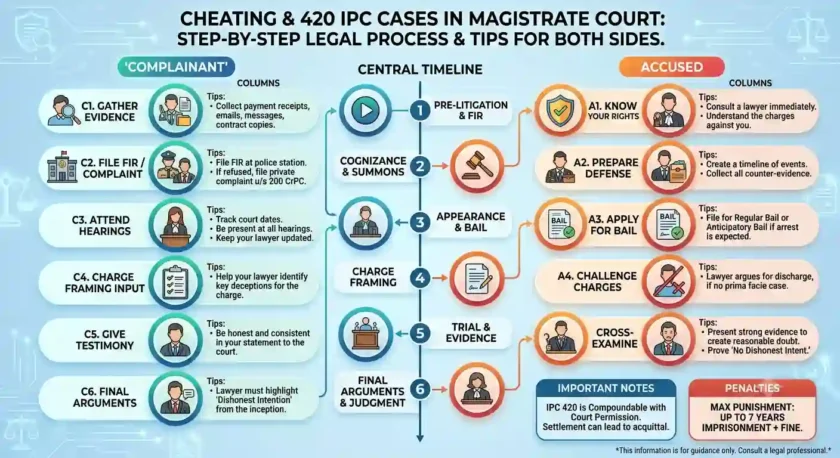
Essential Elements Required to Establish Cheating
A cheating allegation requires specific legal ingredients before criminal liability arises. Furthermore, courts examine facts, intention, and evidence carefully. Important elements include:
- Deception by the accused.
- Dishonest intention from the beginning.
- False representation or concealment.
- Delivery of property or financial loss.
- Wrongful gain or wrongful loss.
The following table explains common situations:
| Situation | Criminal Concern | Possible Legal Action |
|---|---|---|
| False business promise | Cheating allegation | Criminal complaint |
| Property fraud | Dishonest inducement | Magistrate proceedings |
| Financial deception | Monetary loss | Investigation |
| Contract dispute | Civil or criminal issue | Legal review |
However, every breach of contract does not become cheating. Courts distinguish genuine commercial disputes from criminal misconduct. Therefore, evidence showing initial dishonest intention becomes crucial. Legal professionals analyze agreements, communications, payments, and conduct before advising clients. Strong documentation supports both complainants and accused persons during criminal proceedings.
Legal Framework After IPC Replacement
The replacement of IPC, CrPC, and Evidence Act changed criminal law procedures in India. Moreover, advocates must understand the updated framework while handling cheating matters. Relevant laws include:
- Bharatiya Nyaya Sanhita, 2023.
- Bharatiya Nagarik Suraksha Sanhita, 2023.
- Bharatiya Sakshya Adhiniyam, 2023.
- Contract laws.
- Consumer protection laws.
- Civil procedure principles.
Magistrate Courts examine complaints according to criminal procedure requirements. Police Stations conduct investigations after registration of information where applicable. Furthermore, courts evaluate witness statements, documentary records, electronic communications, and financial evidence. The complainant must establish allegations through legally admissible evidence. The accused receives protection through fair trial rights, legal representation, and procedural safeguards. Rajendra Criminal Law Firm assists clients with complaint drafting, defense strategy, bail applications, evidence analysis, and court representation throughout cheating proceedings.
Legal Strategy for Complainants and Accused Persons
Effective Representation Before Magistrate Courts
Cheating cases require balanced legal strategies for both parties involved. Moreover, Magistrate Court proceedings demand proper compliance with criminal procedures. Complainants must present clear facts, supporting documents, and evidence showing dishonest intention. Additionally, accused persons must protect their rights through timely legal representation. Advocates examine complaints, FIRs, police reports, statements, agreements, payment records, and electronic communications. Therefore, professional assistance helps identify legal weaknesses and strengthen arguments. Magistrate Courts consider investigation reports, witness evidence, and statutory requirements before passing orders. Important proceedings include cognizance, summons, bail hearings, charge consideration, trial, evidence recording, and judgment. Furthermore, lawyers assist clients before Police Stations, Judicial Magistrates, Sessions Courts, and High Courts. Proper representation reduces procedural errors and improves opportunities for fair outcomes during criminal litigation.
Evidence Requirements and Defense Preparation
Evidence plays a significant role in cheating cases. Furthermore, the Bharatiya Sakshya Adhiniyam, 2023 guides courts regarding admissibility and evaluation. Important evidence includes:
- Written agreements.
- Bank transaction records.
- Digital communications.
- Email correspondence.
- Audio or video records.
- Witness statements.
- Invoices and receipts.
- Property documents.
The following table explains evidence importance:
| Evidence Type | Purpose | Court Consideration |
|---|---|---|
| Agreements | Establish obligations | Contractual facts |
| Messages | Prove representations | Communication analysis |
| Bank Records | Show transactions | Financial verification |
| Witnesses | Support allegations | Credibility assessment |
| Digital Records | Verify conduct | Electronic evidence |
Consequently, both sides should preserve relevant records from the beginning. Complainants require proof of deception and loss. Accused persons require materials showing genuine transactions or absence of dishonest intention. Therefore, advocates analyze evidence before trial preparation. Effective evidence management improves representation before Magistrate Courts and appellate forums.
Bail, Remedies, and Legal Options
Cheating allegations may involve arrest risks and criminal proceedings. Therefore, accused persons should seek appropriate remedies without delay. Available legal options include:
- Anticipatory bail before arrest.
- Regular bail after arrest.
- Discharge applications.
- Quashing petitions before High Court.
- Revision petitions.
- Criminal appeals.
- Compromise or settlement where legally permitted.
- Civil remedies for contractual disputes.
Complainants may pursue investigation requests, protest petitions, private complaints, and appeals against improper decisions. Furthermore, courts examine whether allegations disclose criminal offences or only civil disputes. Police Stations, Magistrate Courts, Sessions Courts, High Courts, and Special Courts may become involved depending on circumstances. Legal remedies depend upon evidence, jurisdiction, limitation periods, and statutory provisions. Professional criminal lawyers evaluate facts before selecting suitable strategies. Timely action protects rights and strengthens legal positions for both complainants and accused persons.
Professional Legal Support for Cheating Cases
Rajendra Criminal Law Firm’s Courtroom Assistance
Rajendra Criminal Law Firm provides focused legal support for cheating cases before Magistrate Courts and higher judicial forums. Moreover, experienced criminal advocates evaluate allegations, evidence, investigation records, and legal procedures. The firm assists complainants and accused persons in FIR matters, private complaints, bail proceedings, trial defense, evidence examination, appeals, and settlement discussions. Additionally, lawyers handle disputes involving financial fraud, property transactions, business commitments, online fraud, and commercial allegations. The team represents clients before Police Stations, Judicial Magistrate Courts, Sessions Courts, High Courts, and other competent forums. Therefore, timely legal advice helps prevent procedural mistakes and protects legal rights. Advocates also apply principles under BNS, BNSS, and BSA while preparing effective strategies. Professional representation improves case management, evidence presentation, and courtroom advocacy during every stage of criminal proceedings.
Practical Legal Tips for Both Parties
Cheating cases require careful decisions from complainants and accused persons. Furthermore, proper preparation improves legal outcomes and reduces unnecessary complications. Important steps include:
- Preserve all transaction records.
- Avoid unsupported allegations.
- Consult criminal advocates early.
- Understand available remedies.
- Maintain court compliance.
- Follow bail conditions.
- Respect investigation procedures.
- Protect electronic evidence.
- Review legal documents.
- Avoid unnecessary public statements.
Complainants should establish dishonest intention with reliable evidence. However, accused persons should challenge false claims through lawful defenses. Therefore, professional guidance helps both sides understand rights, duties, and available remedies. Courts focus on evidence rather than assumptions during criminal proceedings. Effective legal strategies support fair trials while protecting individual liberty and reputation.
Frequently Asked Questions
Q1. Is Section 420 IPC still applicable for new cheating cases?
Answer: No. New cases follow the Bharatiya Nyaya Sanhita, 2023 provisions replacing IPC offences. Older cases may continue under applicable previous laws.
Q2. Can every breach of contract become a cheating case?
Answer: No. Courts require dishonest intention from the beginning. Genuine contractual disputes usually involve civil remedies rather than criminal liability.
Q3. Can an accused person obtain bail in cheating cases?
Answer: Yes. Courts may grant anticipatory or regular bail after considering allegations, evidence, investigation status, and legal circumstances.
Q4. What evidence helps prove cheating allegations?
Answer: Agreements, payment records, digital messages, emails, witness statements, and documents showing deception can support cheating allegations.
Q5. Can High Courts quash false cheating cases?
Answer: Yes. High Courts may quash proceedings in suitable cases involving abuse of process, lack of offence, or legal defects.
Q6. How can Rajendra Criminal Law Firm assist cheating cases?
Answer: The firm provides complaint assistance, defense strategy, bail representation, evidence analysis, trial advocacy, appeals, and criminal litigation support.
Read More
- The Cost of Hiring a Criminal Lawyer in Chennai: A Breakdown
- How to Get Free Legal Aid for Criminal Cases in Chennai
- Your Guide to the Prevention of Corruption Act
- The Difference Between Theft, Robbery, and Dacoity under IPC
- What is Abetment of Suicide? Laws under IPC 306 Explained
- Ministry of Home Affairs (MHA), Government of India