

The Prevention of Corruption Act, 1988, as amended in 2018, governs corruption offences involving public servants and connected persons. Bharatiya Nyaya Sanhita, 2023 (BNS), Bharatiya Nagarik Suraksha Sanhita, 2023 (BNSS), Bharatiya Sakshya Adhiniyam, 2023 (BSA), constitutional safeguards, and judicial precedents also influence investigations and trials. Rajendra Criminal Law Firm provides strategic legal defense during investigations, arrests, searches, trials, appeals, and revisions. Moreover, timely legal advice protects constitutional rights and procedural safeguards. Matters often involve bribery, criminal misconduct, abuse of official position, disproportionate assets, illegal gratification, conspiracy, forgery, money trails, and digital evidence. Professional legal representation strengthens procedural compliance before Special Courts, High Courts, and the Supreme Court.
Your Guide to the Prevention of Corruption Act – Rajendra Criminal Law Firm
Key Offences Covered Under the Prevention of Corruption Act
The Act criminalizes several corruption-related activities involving public administration. Furthermore, investigators examine financial records, electronic evidence, witness testimony, and official documents. Common allegations include accepting undue advantage, offering bribes, criminal misconduct, possession of disproportionate assets, abuse of official authority, and conspiracy. Investigation agencies scrutinize banking records, contracts, procurement files, digital communications, and property transactions. Every allegation requires detailed factual analysis before legal advice. Strong defense strategies challenge procedural lapses, evidentiary weaknesses, unlawful searches, unauthorized seizures, and statutory violations while protecting the accused throughout criminal proceedings.
Common Corruption-Related Legal Issues
Individuals and organizations frequently encounter these legal concerns. Additionally, prompt legal guidance minimizes procedural risks.
- Bribery allegations
- Trap proceedings
- Disproportionate assets
- Criminal misconduct
- Procurement fraud
- Tender irregularities
- Public servant investigations
- Corporate bribery
- Abuse of office
- Conspiracy allegations
- Asset seizure
- Departmental inquiries
Each allegation requires evidence-based legal evaluation under applicable criminal statutes.
Authorities and Courts Handling Corruption Cases
| Authority | Primary Role |
|---|---|
| Police Station | FIR and investigation |
| State Anti-Corruption Bureau | Corruption investigations |
| Central Bureau of Investigation | Central investigations |
| Lokpal | Corruption complaints |
| Lokayukta | State-level complaints |
| Special Judge (PC Act) | Trial of corruption offences |
| High Court | Bail, quashing, appeals |
| Supreme Court | Constitutional remedies |
Investigation Process and Legal Rights
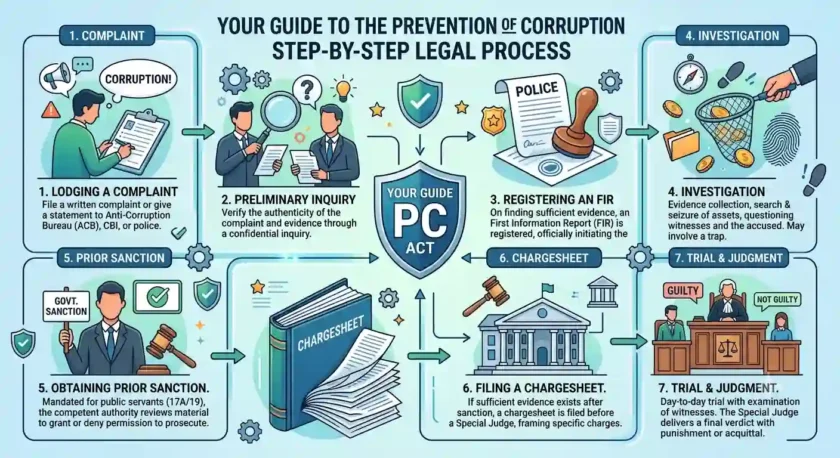
Every accused possesses enforceable constitutional and statutory rights throughout criminal proceedings. Therefore, immediate legal assistance remains essential after notices, searches, or arrests. Authorities must follow lawful procedures during investigation, seizure, interrogation, and prosecution. Defense lawyers review FIRs, sanction orders, witness statements, forensic reports, digital evidence, financial records, and investigation timelines. Prompt legal intervention strengthens bail applications, discharge petitions, revision petitions, and appellate remedies. Effective representation also protects reputation, business interests, employment, and personal liberty during prolonged criminal proceedings.
Rights Available During Investigation
Every accused should understand these legal protections.
- Right to legal representation.
- Right against self-incrimination.
- Right to fair investigation.
- Right to seek bail.
- Right to challenge illegal procedures.
- Right to inspect prosecution material.
- Right to cross-examine witnesses.
- Right to statutory remedies.
Effective Legal Defense Under Anti-Corruption Laws
Defense Strategies in Corruption Cases
Every corruption prosecution demands detailed legal preparation and factual examination. Moreover, successful defense depends upon procedural compliance and reliable evidence. Defense counsel evaluates sanction validity, trap procedures, electronic records, financial transactions, expert reports, digital communications, and prosecution witnesses. Courts carefully examine admissibility under the Bharatiya Sakshya Adhiniyam, 2023. Advocates identify inconsistencies, procedural violations, missing evidence, unlawful recoveries, investigative bias, and constitutional breaches. Comprehensive preparation strengthens courtroom advocacy before Special Courts, High Courts, and appellate forums across India.
Legal Remedies Available to the Accused
Several statutory remedies remain available according to case facts.
- Anticipatory Bail
- Regular Bail
- Default Bail
- Discharge Petition
- Quashing Petition
- Criminal Revision
- Criminal Appeal
- Suspension of Sentence
- Writ Petition
- Special Leave Petition
Appropriate remedies depend upon evidence, statutory timelines, judicial precedents, and procedural compliance.
Legal Support Offered by Rajendra Criminal Law Firm
Professional representation extends beyond courtroom appearances. Consequently, every matter receives strategic legal planning and continuous guidance. Our services include anticipatory bail, regular bail, investigation assistance, notice replies, search-related advice, trial representation, appellate advocacy, revision petitions, quashing proceedings, constitutional litigation, compliance advice, and legal opinions. We also represent public servants, corporate executives, contractors, NGOs, professionals, and NRIs before investigating agencies and criminal courts. Every strategy prioritizes lawful protection of liberty, reputation, and procedural rights.
Why Choose Rajendra Criminal Law Firm
Experienced criminal advocates understand evolving anti-corruption jurisprudence and procedural safeguards. Furthermore, early legal intervention significantly improves litigation outcomes. We provide transparent legal advice, confidential consultations, evidence review, courtroom advocacy, appellate representation, and strategic defense planning. Our lawyers analyze investigation records, prosecution documents, sanction requirements, statutory compliance, and judicial precedents before recommending legal remedies. Every client receives personalized legal solutions designed for effective criminal defense while safeguarding constitutional rights before competent courts throughout India.
Matters Commonly Handled by Our Firm
Our practice regularly includes these corruption-related matters.
- Bribery defense
- Public servant cases
- CBI investigations
- Anti-Corruption Bureau matters
- Lokayukta proceedings
- Tender fraud allegations
- Procurement disputes
- Asset investigations
- Search and seizure
- Criminal appeals
- Bail proceedings
- Departmental proceedings
- Corporate corruption
- NRI criminal defense
- High Court litigation
Early Legal Advice Protects Your Rights
Immediate legal consultation strengthens procedural safeguards from the beginning. Therefore, individuals should avoid making uninformed statements before investigators. Experienced advocates review notices, sanction requirements, investigation records, financial documents, and electronic evidence before advising clients. Timely legal action reduces procedural errors, protects constitutional rights, strengthens available remedies, and improves courtroom preparedness. Rajendra Criminal Law Firm remains committed to ethical advocacy, strategic litigation, and effective criminal defense throughout every stage of anti-corruption proceedings.
Frequently Asked Questions
Q1. What is the Prevention of Corruption Act?
The Act criminalizes bribery, undue advantage, criminal misconduct, and related corruption offences involving public servants and connected individuals.
Q2. Can I obtain bail in a corruption case?
Yes. Depending upon facts and applicable law, courts may grant anticipatory, regular, or statutory bail.
Q3. Which courts hear corruption cases?
Special Judges under the Prevention of Corruption Act conduct trials, while High Courts and the Supreme Court hear appropriate appeals.
Q4. Can corruption proceedings be challenged?
Yes. Eligible matters may proceed through discharge applications, quashing petitions, appeals, revisions, or constitutional remedies.
Q5. Which agencies investigate corruption offences?
Investigations may involve State Police, Anti-Corruption Bureau, Central Bureau of Investigation, Lokpal, or Lokayukta authorities.
Q6. Why should I engage a criminal defense lawyer early?
Early legal advice protects procedural rights, strengthens defense strategy, preserves evidence, and improves responses during investigation and trial.
Read More
- What is Abetment of Suicide? Laws under IPC 306 Explained
- Can a Compoundable Offence be Settled Out of Court?
- The Difference Between Theft, Robbery, and Dacoity under IPC
- Legal Advice for Cyber Bullying and Online Harassment Victims
- How to Appeal a Criminal Conviction in the High Court
- Ministry of Law & Justice – Legislative Department