
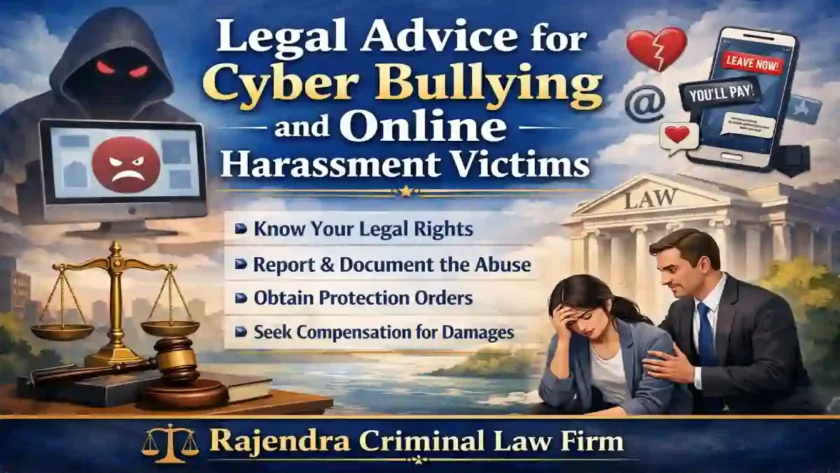
Legal Advice for Cyber Bullying – Cyber bullying affects individuals, students, professionals, women, businesses, and social media users daily. Online harassment may involve threats, stalking, defamation, impersonation, blackmail, and abusive communications. Therefore, victims should understand their legal rights immediately. Indian laws provide remedies against digital misconduct and online abuse. The Bharatiya Nyaya Sanhita, 2023 addresses criminal intimidation, defamation, stalking, and harassment offences. Additionally, the Information Technology Act remains relevant for cyber-related violations. Rajendra Criminal Law Firm assists victims with complaints, investigations, and court proceedings. Early legal intervention often prevents further harm and evidence destruction. Victims should preserve screenshots, messages, emails, and account details carefully. Moreover, prompt reporting improves enforcement prospects significantly. Legal guidance helps victims pursue compensation, protection, and criminal action against offenders.
Legal Advice for Cyber Bullying and Online Harassment Victims – Rajendra Criminal Law Firm
| Cyber Issue | Legal Concern |
|---|---|
| Cyber Stalking | Criminal Offence |
| Online Threats | Intimidation |
| Fake Profiles | Impersonation |
| Defamatory Posts | Reputation Damage |
Common Forms of Online Harassment
Online harassment appears in several forms across digital platforms. Cyber stalking remains one of the most reported complaints. Furthermore, fake social media profiles frequently damage reputations and personal relationships. Offenders may circulate private content without consent. Victims also face abusive messages, trolling campaigns, and identity theft. Consequently, emotional distress and financial losses often follow. Legal remedies depend upon the nature of misconduct and available evidence. Professional legal assessment helps determine suitable actions quickly. Rajendra Criminal Law Firm advises victims regarding complaint procedures and legal strategies.
Common Violations
- Cyber stalking.
- Online threats.
- Identity theft.
- Defamation (see criminal defamation under BNS Section 356).
- Impersonation.
Legal Rights Available to Victims
Victims possess important legal protections under Indian law. Authorities can investigate complaints involving harassment and intimidation. Moreover, courts may grant remedies protecting privacy and reputation. Victims may seek criminal prosecution, injunctions, and compensation where appropriate. Law enforcement agencies increasingly prioritize cybercrime complaints. Therefore, victims should report incidents without delay. Strong evidence improves investigation quality and legal outcomes. Professional representation ensures proper compliance with procedural requirements. Early action often limits continuing harm and digital exposure.
Important Evidence for Cyber Cases
Evidence forms the foundation of successful cybercrime complaints. Victims should collect screenshots showing offensive content and communications. Additionally, email records and social media links often prove valuable. Device logs may support identification of offenders. Authorities frequently rely upon digital evidence during investigations. Organized documentation strengthens legal claims and prosecution efforts. Rajendra Criminal Law Firm assists clients with evidence preservation and case preparation. Proper handling prevents loss of crucial information.
Reporting Cyber Bullying to Authorities
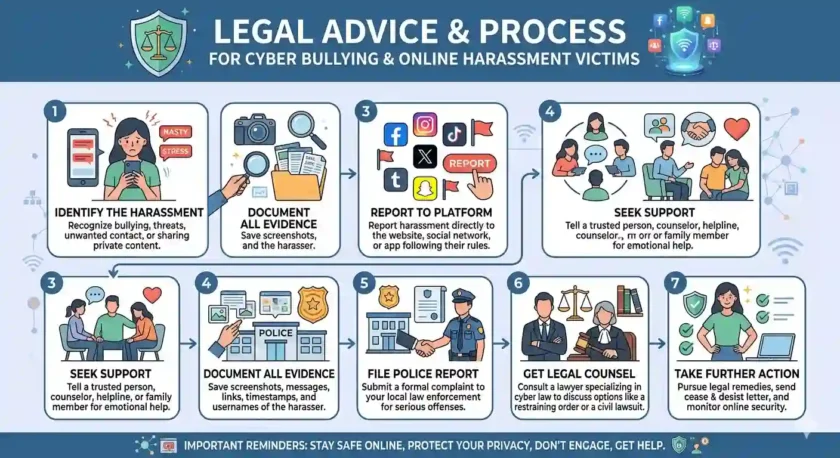
Victims should report cyber offences through appropriate channels. Local police stations can register complaints involving criminal conduct. Furthermore, cybercrime police units investigate specialized digital offences. Authorities may invoke BNS, BNSS, and BSA provisions where applicable. Complaint narratives should remain factual and supported by evidence. Timely reporting often accelerates investigative action. Legal counsel helps victims prepare detailed representations and supporting documents.
Reporting Steps
- Preserve evidence.
- Identify accounts.
- File complaint.
- Cooperate with investigators.
- Seek legal advice.
Consequences for Offenders
Cyber offenders may face significant legal consequences. Criminal penalties often depend upon the seriousness of conduct. Moreover, courts may impose fines, imprisonment, or other lawful sanctions. Repeated misconduct generally attracts stricter scrutiny. Victims may also pursue civil remedies for damages. Effective legal action discourages future misconduct and protects community safety. Proper enforcement reinforces accountability across digital platforms.
Remedies, Courts and Legal Representation
Victims require strategic legal support after experiencing online harassment. Different remedies apply depending upon facts and evidence. Therefore, legal assessment remains essential from the beginning. Rajendra Criminal Law Firm provides comprehensive support throughout investigations and litigation. Early representation strengthens complaint preparation and procedural compliance. Effective advocacy protects victims’ rights and interests. Timely intervention frequently improves outcomes before authorities and courts.
Criminal Remedies and Investigation Process
Criminal law offers strong remedies against cyber bullying and harassment. Police authorities investigate complaints and gather digital evidence. Furthermore, investigators may seek information from service providers and platforms. Authorities examine communications, account activity, and related records. Victims should cooperate fully during investigations. Legal professionals help clients respond to procedural requirements. Strategic representation safeguards rights throughout enforcement proceedings.
| Authority | Function |
|---|---|
| Local Police | Complaint Registration |
| Cyber Crime Cell | Investigation |
| Magistrate Court | Criminal Proceedings |
| High Court | Writ Remedies |
Civil Remedies and Compensation Claims
Victims may pursue civil remedies in suitable circumstances. Defamation claims often arise from false online statements. Additionally, injunctions may restrain continuing publication of harmful content. Compensation may address financial and reputational losses. Courts examine evidence and determine appropriate relief. Strategic legal planning strengthens civil claims significantly. Professional representation improves procedural compliance and case presentation.
Government Departments and Relevant Authorities
Several authorities assist victims of cyber harassment. Cyber Crime Cells investigate technology-related offences nationwide. Moreover, police departments coordinate enforcement actions where necessary. Government agencies may support digital safety initiatives and awareness programs. Victims should engage with lawful processes promptly. Legal advisors help navigate investigations and administrative procedures. Proper coordination often improves case resolution.
Relevant Authorities
- Cyber Crime Cell.
- Local Police.
- Judicial Magistrate Courts.
- High Courts.
- Government Cyber Units.
Courts, Jurisdiction and Appeals
Cybercrime matters may proceed before various judicial forums. Magistrate Courts commonly handle criminal proceedings initially. Furthermore, Sessions Courts hear certain serious matters and appeals. High Courts exercise supervisory and writ jurisdiction. The Supreme Court remains the highest judicial authority. Jurisdiction depends upon offence location and procedural factors. Legal representation ensures effective advocacy before appropriate forums.
Why Choose Rajendra Criminal Law Firm
Rajendra Criminal Law Firm delivers dedicated support for cyber bullying and online harassment victims. Our lawyers assist students, professionals, women, families, businesses, and NRIs. Furthermore, we handle complaints, investigations, bail matters, and court proceedings. Clients receive practical advice focused on swift protection. We represent victims before police authorities, cybercrime units, and courts. Comprehensive legal assistance helps restore security and confidence. Strong advocacy protects rights, reputation, and digital privacy.
Legal Support Services
- Cybercrime complaints.
- Evidence preservation.
- Criminal representation.
- Defamation actions.
- Court proceedings.
Frequently Asked Questions
1. What qualifies as cyber bullying under Indian law?
Cyber bullying includes threats, stalking, abusive messages, impersonation, defamation, and repeated online harassment.
2. What evidence should victims preserve?
Victims should save screenshots, emails, chats, account details, links, and other digital records.
3. Where can victims report cyber harassment?
Victims may approach local police stations, cybercrime cells, or competent courts.
4. Can online defamation result in legal action?
Yes. Victims may pursue criminal complaints and civil remedies for reputational harm.
5. Which laws apply to cyber bullying cases?
Relevant provisions may arise under BNS, BNSS, BSA, and applicable cyber laws.
6. When should legal assistance be sought?
Victims should seek legal advice immediately after discovering online harassment or cyber abuse.
Read More
- How to Appeal a Criminal Conviction in the High Court
- What is the Punishment for Financial Fraud in India?
- Understanding Forensic Evidence in Criminal Trials
- How to Handle a False Criminal Case: A Legal Strategy
- Section 420 IPC: Cheating and Fraud – Punishment & Defence
- Ministry of Home Affairs (Cyber Crime Division)