

Can a Compoundable Offence be Settled – Compoundable offences allow parties to resolve disputes through lawful settlement mechanisms. Indian criminal law recognizes specific offences suitable for compromise. Rajendra Criminal Law Firm assists complainants and accused persons during settlement proceedings. The Bharatiya Nagarik Suraksha Sanhita, 2023 governs procedural aspects of criminal cases. Certain offences affect private rights more than public interests. Therefore, lawmakers permit compromise in suitable circumstances. Courts examine voluntariness, fairness, and legality before accepting settlements. Legal issues often involve assault, defamation, criminal trespass, and matrimonial disputes. Police stations usually record complaints before judicial proceedings commence. Moreover, evidence requirements remain important despite settlement discussions. Relevant laws include BNS, BNSS, BSA, and constitutional protections. Jurisdiction generally depends upon the place of occurrence. Proper legal advice helps parties avoid procedural mistakes and future disputes. Settlement often saves time, litigation expenses, and emotional strain.
Can a Compoundable Offence be Settled Out of Court – Rajendra Criminal Law Firm
Difference Between Compoundable and Non-Compoundable Offences
Indian criminal law classifies offences into compoundable and non-compoundable categories. Compoundable offences permit settlement through statutory procedures. Non-compoundable offences generally require full criminal prosecution. Consequently, parties cannot privately terminate serious criminal allegations. Courts evaluate offence nature before approving compromises. Public interest plays a significant role during judicial scrutiny. Crimes involving grave societal impact rarely qualify for compounding. Legal practitioners assess eligibility before initiating settlement discussions. Furthermore, procedural compliance remains essential for valid compromise orders. Understanding classification prevents ineffective negotiations and unnecessary litigation.
| Offence Type | Settlement Status |
|---|---|
| Compoundable | Settlement Permitted |
| Non-Compoundable | Settlement Restricted |
| Serious Crimes | Usually Non-Compoundable |
| Private Disputes | Often Compoundable |
Common Types of Compoundable Criminal Cases
Several criminal disputes commonly qualify for lawful compromise. Minor hurt cases frequently involve negotiated settlements. Therefore, parties often seek amicable resolution before trial completion. Defamation disputes sometimes conclude through mutual understanding. Criminal trespass allegations may also permit compromise. Matrimonial disagreements occasionally involve settlement agreements and withdrawal requests. Property-related personal disputes sometimes qualify under statutory provisions. Moreover, neighborhood conflicts often resolve through mediation efforts. Courts encourage lawful settlements where justice and fairness align. Professional legal representation helps parties understand available options.
Common Compoundable Matters
- Minor hurt allegations.
- Defamation complaints.
- Criminal trespass disputes.
- Matrimonial disagreements.
- Personal property conflicts.
- Certain neighborhood disputes.
Legal Procedure for Settling a Compoundable Offence
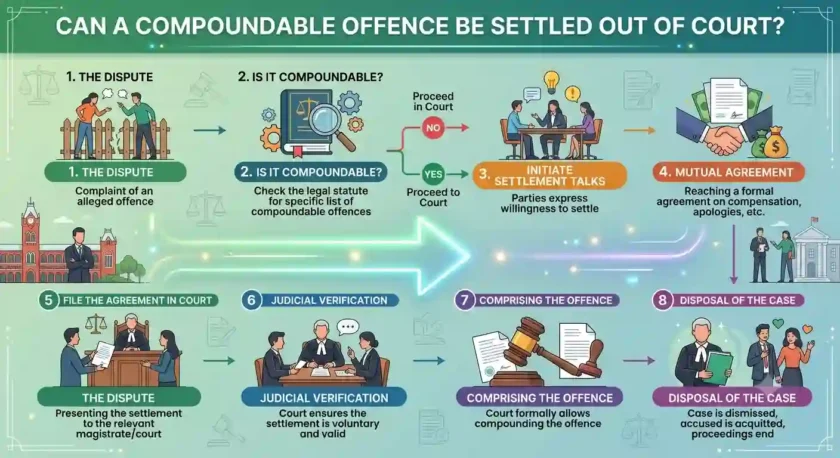
Settlement requires compliance with applicable procedural requirements. Parties generally prepare a compromise memorandum or settlement terms. Consequently, courts receive evidence supporting mutual consent. Judicial officers verify voluntariness and absence of coercion. Complainants usually confirm settlement during proceedings. Legal counsel assists with documentation and procedural compliance. Courts examine whether statutory conditions permit compounding. Furthermore, judges consider fairness and public policy concerns. Once approved, proceedings may conclude according to law. Proper drafting reduces future disputes and interpretation issues.
Role of Police, Courts, and Legal Counsel
Police officers often facilitate preliminary complaint processing. However, courts retain authority regarding lawful compounding approval. Therefore, parties should obtain professional legal guidance promptly. Lawyers explain legal consequences and procedural requirements clearly. Judicial Magistrates frequently handle compoundable criminal matters. Sessions Courts may exercise jurisdiction in appropriate cases. Police stations maintain records relevant to settlement discussions. Additionally, legal counsel ensures informed decision-making throughout proceedings. Effective representation protects rights and minimizes procedural risks.
Court Permission and Judicial Scrutiny Requirements
Some offences require judicial permission before valid compounding occurs. Courts carefully review settlement terms and surrounding circumstances. Consequently, transparency remains essential during compromise proceedings. Judges assess whether parties acted voluntarily and knowingly. Fraudulent or coerced settlements attract judicial rejection. Legal representatives present relevant facts and supporting materials. Courts balance individual interests and broader justice considerations. Proper disclosures strengthen settlement approval prospects significantly. Judicial scrutiny preserves fairness within the criminal justice system.
Settlement Approval Factors
- Voluntary consent.
- Legal eligibility.
- Genuine compromise.
- Absence of coercion.
- Public interest considerations.
- Procedural compliance.
Legal Benefits of Settling Compoundable Offences
Settlement offers practical and legal advantages for parties. Litigation costs often reduce after successful compromise. Therefore, parties conserve valuable financial and personal resources. Court congestion may decrease through lawful settlements. Relationships sometimes improve after negotiated resolutions. Settlement also provides certainty regarding dispute outcomes. Criminal records may avoid prolonged adverse consequences. Moreover, emotional stress frequently declines following compromise. Timely legal advice helps maximize settlement benefits. Structured agreements reduce future misunderstandings and conflicts.
Legal Issues That May Affect Settlement Validity
Several factors can affect settlement enforceability and approval. Coercion allegations often undermine compromise proceedings significantly. Consequently, courts closely review consent-related concerns. Misrepresentation may invalidate settlement agreements and supporting statements. Parties should disclose material facts honestly and completely. Forged documents can trigger separate criminal investigations. BNS, BNSS, and BSA provisions may become relevant. Additionally, police authorities may investigate related criminal conduct. Legal professionals help identify risks before settlement finalization. Careful preparation strengthens procedural and substantive compliance.
Jurisdiction, Forums, and Criminal Proceedings
Criminal proceedings follow jurisdictional rules established by law. Judicial Magistrates commonly hear many compoundable offence cases. Therefore, parties must approach the appropriate forum. Sessions Courts may handle matters within their jurisdiction. High Courts exercise inherent powers in suitable circumstances. Criminal complaints generally originate through police or private complaints. Evidence receives evaluation according to BSA principles. Legal support remains valuable before every judicial forum. Correct jurisdictional strategy improves procedural efficiency and case management.
Remedies Available to Parties During Criminal Disputes
Parties possess several remedies before and after settlement discussions. They may seek mediation, compromise, or statutory compounding. Moreover, legal notices sometimes encourage early resolution efforts. Courts may record lawful settlements and conclude proceedings. Parties can challenge coercive actions through legal remedies. High Courts may provide relief in appropriate cases. Victims retain rights regarding compensation and lawful protections. Professional legal representation strengthens strategic decision-making. Timely action protects rights and procedural interests effectively.
Available Remedies
- Compounding applications.
- Mediation proceedings.
- Settlement agreements.
- Judicial compromise recording.
- Compensation claims.
- High Court remedies.
Why Legal Representation Matters in Compoundable Cases
Professional representation improves compliance and settlement outcomes significantly. Lawyers evaluate offence classification and legal eligibility carefully. Consequently, parties avoid invalid settlements and procedural delays. Legal advisors draft clear and enforceable compromise documents. Courts often appreciate well-prepared applications and supporting records. Representation helps protect rights during negotiations and hearings. Rajendra Criminal Law Firm provides strategic criminal defense and settlement services. Our team assists complainants, accused persons, families, and businesses. Effective legal guidance supports lawful, efficient, and durable dispute resolution.
Can a Compoundable Offence Truly Be Settled Out of Court
Compoundable offences permit settlement, yet courts often supervise the final process. Therefore, parties should not rely upon informal arrangements alone. Legal compliance remains necessary for enforceable outcomes. Judicial approval may be mandatory depending upon offence classification. Proper documentation supports transparency and procedural validity. Moreover, lawful compromise protects parties from future disputes. Courts encourage genuine settlements where justice permits resolution. Rajendra Criminal Law Firm guides clients through negotiations, documentation, and court proceedings. Strategic legal support ensures settlements satisfy statutory requirements. Early legal intervention often produces faster and more effective resolutions.
FAQs
Can every criminal offence be settled out of court?
No. Only legally recognized compoundable offences qualify for settlement through statutory procedures.
Is court permission always necessary?
Some compoundable offences require court approval, while others permit compounding without prior permission.
Can police close a compoundable case after settlement?
Police actions depend upon case stage and legal provisions. Courts often play a decisive role.
What if one party signs under pressure?
Courts may reject settlements involving coercion, fraud, or lack of genuine consent.
Can a High Court quash proceedings after settlement?
Yes. High Courts may exercise appropriate powers in suitable circumstances and interests of justice.
Why should parties hire a criminal lawyer?
Lawyers assess eligibility, prepare documents, protect rights, and ensure procedural compliance.