File a Complaint Against Officers – State Social Welfare Departments provide essential public services involving women welfare, child protection, disability assistance, older citizen support, and social security schemes. However, misconduct, corruption, delay, discrimination, or misuse of authority by officers can affect citizens’ legal rights. Rajendra Criminal Law Firm assists individuals, NGOs, beneficiaries, and affected parties in filing complaints against government officers. Moreover, our advocates examine administrative failures, criminal misconduct, procedural violations, and constitutional remedies. Relevant laws include Bharatiya Nyaya Sanhita, 2023, Bharatiya Nagarik Suraksha Sanhita, 2023, Bharatiya Sakshya Adhiniyam, 2023, Prevention of Corruption Act, 1988, Right to Information Act, 2005, CPC, and administrative law principles. We represent clients before Vigilance Departments, Police Stations, Magistrate Courts, High Courts, Tribunals, and government authorities. Our legal support focuses on accountability, transparency, lawful investigation, and effective remedies.
How to File a Complaint Against Officers in State Social Welfare Departments – Rajendra Criminal Law Firm
Identifying Grounds for Complaints Against Welfare Officers
Citizens may approach legal authorities when social welfare officers fail to perform statutory duties or abuse official powers. Therefore, identifying the exact legal issue strengthens the complaint process. Rajendra Criminal Law Firm assists clients facing:
- Unreasonable delay in government welfare benefits.
- Corruption demands for approvals or services.
- Misuse of official position.
- False records or misleading reports.
- Discrimination against eligible beneficiaries.
- Harassment during welfare applications.
- Neglect of child protection duties.
- Improper handling of disability or pension schemes.
Furthermore, complaints require factual details, supporting documents, and clear allegations. Officers may face departmental action, criminal investigation, or judicial proceedings depending upon the nature of misconduct. Our advocates review government communications, application records, sanction orders, and evidence before selecting suitable legal remedies. Additionally, we guide clients regarding departmental complaints, police complaints, vigilance proceedings, and court interventions. Proper legal strategy ensures authorities address genuine grievances through lawful procedures.
Understanding Complaint Forums and Legal Authorities
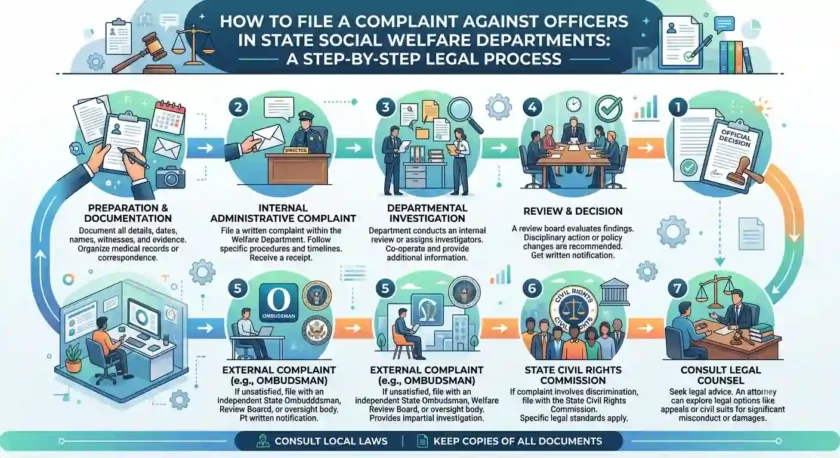
Selecting the correct forum remains essential when challenging actions or inactions of Social Welfare Department officers. Therefore, complainants should understand available authorities before initiating proceedings. Different forums handle different categories of grievances.
| Authority / Forum | Purpose |
|---|---|
| District Social Welfare Officer | Department-level grievance resolution |
| State Social Welfare Department | Administrative review |
| Vigilance and Anti-Corruption Bureau | Corruption complaints |
| Police Station Nearby | Criminal complaints under BNS provisions |
| Magistrate Court | Complaint proceedings and investigations under BNSS |
| High Court | Writ petitions and constitutional remedies |
| Administrative Tribunals | Service-related disputes involving officers |
| Human Rights Commission | Rights violation complaints |
Moreover, Rajendra Criminal Law Firm assists clients in choosing appropriate forums based on facts, jurisdiction, and available evidence. We prepare representations, legal notices, complaints, writ petitions, and supporting affidavits. Additionally, we assist during investigations, hearings, and appeals. Effective forum selection improves the possibility of timely relief while protecting complainant rights under Indian law.
Procedure to File Complaint Against Social Welfare Officers
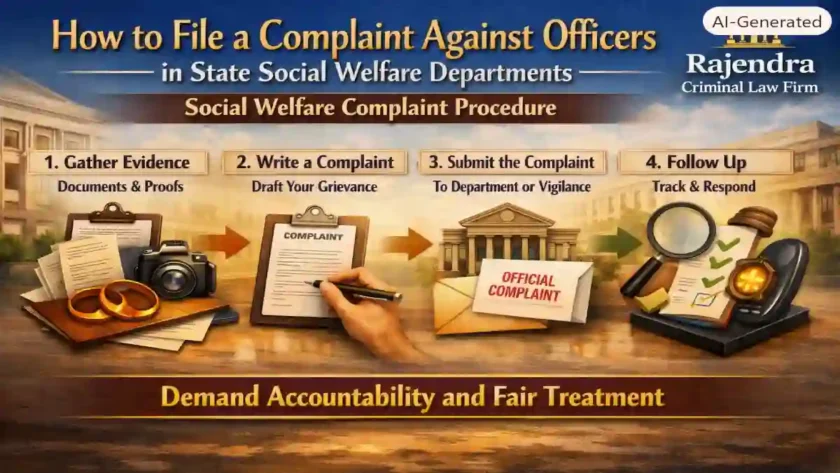
Filing a complaint against Social Welfare Department officers requires proper documentation and legal planning. Therefore, complainants should follow a structured procedure before approaching authorities. Rajendra Criminal Law Firm guides individuals through each stage while ensuring compliance with applicable laws. The complaint process generally includes:
- Collecting evidence related to misconduct or delay.
- Preparing a detailed written complaint.
- Attaching supporting documents and records.
- Submitting complaints before competent authorities.
- Seeking acknowledgement and tracking progress.
- Approaching vigilance agencies for corruption issues.
- Filing police complaints for criminal offences.
- Seeking judicial remedies where necessary.
Furthermore, complaints should mention officer details, department information, dates, incidents, witnesses, and requested relief. The Bharatiya Sakshya Adhiniyam, 2023 governs evidence assessment during proceedings. Our advocates prepare legally structured complaints, representations, affidavits, and petitions. Additionally, we assist clients during departmental inquiries, police investigations, Magistrate proceedings, and constitutional remedies before High Courts. Proper legal drafting strengthens accountability and improves the effectiveness of grievance resolution mechanisms.
Evidence Required for Social Welfare Officer Complaints
Strong evidence supports complaints involving government officer misconduct, negligence, or abuse of authority. Therefore, complainants should preserve every relevant document before approaching authorities. Rajendra Criminal Law Firm evaluates available records and advises clients regarding evidence collection. Important evidence includes:
| Evidence Type | Examples |
|---|---|
| Official Documents | Applications, sanction orders, notices |
| Communication Records | Emails, letters, messages |
| Financial Records | Payment details, receipts, transaction proof |
| Audio or Video Evidence | Lawfully obtained recordings |
| Witness Statements | Testimony from affected persons |
| RTI Documents | Information obtained under RTI Act |
| Department Records | Files, reports, inspection documents |
Moreover, evidence must comply with legal requirements under the BSA, 2023. Our advocates verify authenticity, relevance, and admissibility before filing complaints. Additionally, we assist clients in obtaining information through Right to Information applications. Proper evidence preparation helps authorities conduct fair investigations while preventing dismissal of genuine grievances. Effective documentation also supports proceedings before Vigilance Authorities, Police Stations, Magistrate Courts, Tribunals, and High Courts.
Criminal and Administrative Remedies Against Officers
Government officers may face different consequences depending upon the nature of alleged misconduct. Therefore, complainants should identify whether the matter requires criminal action, departmental proceedings, or judicial intervention. Rajendra Criminal Law Firm provides representation for various remedies, including:
- Departmental disciplinary complaints.
- Vigilance and corruption investigations.
- Police complaints under BNS provisions.
- Magistrate-directed investigations under BNSS.
- Writ petitions before High Courts.
- Compensation claims where legally available.
- Administrative appeals and reviews.
- Human rights complaints.
Furthermore, corruption allegations may involve proceedings under the Prevention of Corruption Act, 1988. Negligence, abuse of power, and criminal misconduct may attract applicable provisions under BNS, 2023. Our advocates analyse facts before recommending appropriate remedies. Additionally, we represent complainants during inquiry proceedings, investigation stages, hearings, and court proceedings. Strategic legal action ensures government officers remain accountable while protecting citizens’ fundamental rights and lawful interests.
Role of High Courts and Judicial Remedies
High Courts provide constitutional remedies when administrative authorities fail to address genuine complaints. Therefore, affected persons may seek judicial intervention through writ petitions under Article 226 of the Constitution. Rajendra Criminal Law Firm assists clients when departmental mechanisms become ineffective or delayed. High Court remedies may include:
- Directions for fair investigation.
- Orders requiring authorities to consider complaints.
- Protection against administrative harassment.
- Review of unlawful government actions.
- Enforcement of fundamental rights.
Furthermore, courts examine whether authorities followed principles of natural justice, fairness, and statutory duties. The CPC, BNSS, BNS, and BSA support different procedural aspects depending upon the nature of proceedings. Our advocates prepare writ petitions, legal submissions, supporting affidavits, and evidence documents. Additionally, we represent clients before High Courts and other competent forums. Judicial review provides an effective mechanism against arbitrary administrative actions while ensuring government officers perform duties according to law and public accountability standards.
Legal Support for NGOs, Individuals, and Vulnerable Groups
Social Welfare Departments handle schemes benefiting vulnerable communities, including children, women, older citizens, and persons with disabilities. Therefore, NGOs and individuals may require professional legal assistance when welfare services fail. Rajendra Criminal Law Firm provides support for:
- Welfare scheme implementation disputes.
- Beneficiary rights protection.
- Government inaction complaints.
- Corruption-related grievances.
- Disability benefit issues.
- Child welfare concerns.
- Pension and social security disputes.
- Public interest complaints.
Moreover, NGOs can assist affected groups while maintaining legal compliance and proper documentation. Our advocates advise organisations regarding representations, statutory procedures, evidence collection, and court remedies. Additionally, we help vulnerable persons access legal mechanisms through appropriate authorities. Effective legal intervention improves transparency and encourages responsible administration. Our team represents clients before government departments, Vigilance Authorities, Police Stations, Courts, Tribunals, and Human Rights Commissions. We focus on achieving lawful remedies while protecting public welfare interests.
Why Choose Rajendra Criminal Law Firm for Government Officer Complaints
Complaints against government officers require legal expertise because administrative and criminal procedures involve complex requirements. Therefore, Rajendra Criminal Law Firm provides experienced representation for citizens challenging misconduct, corruption, negligence, and misuse of authority. Our advocates analyse facts, identify legal violations, prepare complaints, and select suitable forums. Furthermore, we represent clients before Social Welfare Departments, Vigilance Authorities, Police Stations, Magistrate Courts, High Courts, and Tribunals. We assist with evidence preparation, RTI applications, departmental proceedings, investigations, and judicial remedies. Additionally, our team ensures complaints follow applicable provisions under BNS, BNSS, BSA, CPC, and administrative laws. Every case receives strategic attention based on legal issues, available evidence, and desired outcomes. Our objective remains ensuring accountability, protecting citizen rights, and pursuing effective legal remedies through professional advocacy.
Conclusion
Government accountability remains essential for effective delivery of social welfare services. Therefore, citizens should understand legal options when officers fail to perform duties or misuse authority. Rajendra Criminal Law Firm provides comprehensive legal assistance for complaints against State Social Welfare Department officers. Our advocates handle departmental complaints, vigilance proceedings, police complaints, Magistrate applications, writ petitions, and appeals. Furthermore, we assist individuals, NGOs, beneficiaries, and vulnerable groups in protecting their lawful rights. We analyse every matter under relevant laws, including BNS, BNSS, BSA, CPC, Prevention of Corruption Act, and Right to Information Act. Proper legal guidance helps clients pursue justice through appropriate forums. Our experienced legal team remains committed to transparency, accountability, and effective remedies. Citizens can rely on our representation for resolving administrative grievances and seeking lawful action against negligent or improper government officials.
Frequently Asked Questions
1. Where can I complain against a State Social Welfare Department officer?
You can complain before departmental authorities, Vigilance Departments, Police Stations, Magistrate Courts, Human Rights Commissions, or High Courts.
2. Can I file a criminal complaint against a welfare officer?
Yes. Criminal complaints may be filed when misconduct involves corruption, fraud, abuse of authority, or offences under applicable laws.
3. What evidence is required against a government officer?
Documents, official communications, RTI records, witness statements, financial records, and lawful electronic evidence can support complaints.
4. Can NGOs file complaints against welfare department misconduct?
Yes. NGOs may submit complaints or support affected persons while following applicable legal procedures and documentation requirements.
5. Can the High Court intervene against administrative inaction?
Yes. High Courts may issue directions through writ jurisdiction when authorities fail to perform statutory duties.
6. Why hire a criminal lawyer for complaints against officers?
A criminal lawyer provides legal strategy, complaint drafting, evidence assessment, forum selection, investigation support, and court representation.
Read More
- How to Report Corruption in State Health Department Offices
- Complaint Process for State Education Department Officials
- Accused in a Cybercrime You Didn’t Commit? 5 Urgent Steps to Take
- POCSO Defence: What Most Parents Don’t Know Until It’s Too Late
- False 498A? Here’s What Courts in Chennai Are Actually Doing
- Centralised Public Grievance Redress and Monitoring System (CPGRAMS)