Immigration Justice: Advocacy for Immigration Offense Cases

Immigration Justice_ Advocacy for Immigration Offense Cases - featured image

Introduction: Immigration Offense Defence in Chennai Immigration offences can create serious criminal, travel, employment, and family consequences. Therefore, timely legal guidance can help protect procedural rights. Immigration cases may involve unlawful entry, visa violations, forged documents, overstaying, restricted-area violations, or assistance allegations. Additionally, allegations can involve employers, carriers, accommodation providers, agents, or intermediaries. Since September

Immigration Justice: Advocacy for Immigration Offense Cases Read More »

Money Smuggling Defense: Legal Representation for Money Smuggling Charges

Money Smuggling Defense: Legal Representation for Money Smuggling Charges

Money Smuggling Defense – Money smuggling allegations can arise when authorities suspect unlawful cross-border movement of Indian or foreign currency. The Customs Act, 1962 regulates customs declarations, prohibited goods, searches, seizures, confiscation and related offences. Therefore, passengers, traders, businesses and intermediaries can face serious proceedings after airport or border interceptions. Currency-related allegations may also involve

Money Smuggling Defense: Legal Representation for Money Smuggling Charges Read More »

Drug Policy Reform: Advocacy for Drug Paraphernalia Possession Defense

Drug Policy Reform: Advocacy for Drug Paraphernalia Possession Defense

Drug Policy Reform – Drug paraphernalia possession requires careful analysis under India’s Narcotic Drugs and Psychotropic Substances Act, 1985. The NDPS Act regulates narcotic drugs, psychotropic substances, controlled substances, manufacture, possession, consumption, trafficking, and related conduct. However, ordinary possession of an object does not automatically establish an NDPS offence. Prosecutors must connect seized articles with

Drug Policy Reform: Advocacy for Drug Paraphernalia Possession Defense Read More »

Fighting Narcotics Charges: Legal Support for Narcotics Possession Cases

Fighting Narcotics Charges: Legal Support for Narcotics Possession Cases

Legal Support for Narcotics Possession – The Narcotic Drugs and Psychotropic Substances Act, 1985 governs narcotics possession offences across India. The statute regulates possession, manufacture, sale, transport, consumption, and trafficking of controlled substances. Therefore, prosecutors must establish the ingredients of the specific offence charged. Possession can create serious consequences depending upon the substance and quantity

Fighting Narcotics Charges: Legal Support for Narcotics Possession Cases Read More »

Defending Your Rights: Advocacy for Drug Trafficking Charges

Defending Your Rights: Advocacy for Drug Trafficking Charges

Advocacy for Drug Trafficking Charges – Legal framework and prosecution: Drug trafficking allegations primarily arise under the Narcotic Drugs and Psychotropic Substances Act, 1985. The Department of Revenue administers the NDPS framework and publishes current notifications and rules. Trafficking cases can involve possession, transportation, manufacture, sale, purchase, financing, or organised supply networks. Therefore, defence strategy

Defending Your Rights: Advocacy for Drug Trafficking Charges Read More »

Protecting Second Amendment Rights: Legal Aid for Unauthorized Firearms Possession

Protecting Second Amendment Rights: Legal Aid for Unauthorized Firearms Possession

Protecting Second Amendment Rights – India does not recognise a constitutional “Second Amendment right” to possess firearms. The Arms Act, 1959 regulates acquisition, possession, carrying, manufacture, sale, transfer, and use of firearms. The Ministry of Home Affairs maintains the Arms Act and Arms Rules through its Internal Security divisions. Therefore, unauthorized possession can create serious

Protecting Second Amendment Rights: Legal Aid for Unauthorized Firearms Possession Read More »

Filing Complaints Against Bureaucratic Misconduct in India: Central & State Tips

Filing Complaints Against Bureaucratic Misconduct in India: Central & State Tips

Filing Complaints Against Bureaucratic Misconduct – Bureaucratic misconduct involves unlawful, arbitrary, negligent, discriminatory, or corrupt conduct by public officials. Common examples include deliberate delay, refusal to perform statutory duties, harassment, favouritism, forged records, illegal demands, and abuse of authority. Moreover, misconduct may affect citizens, companies, NGOs, employees, and NRIs dealing with government departments. A complaint

Filing Complaints Against Bureaucratic Misconduct in India: Central & State Tips Read More »

Where and How to Lodge Complaints About Government Officials in India

Where and How to Lodge Complaints About Government Officials in India

Lodge Complaints About Government Officials – Government official complaints may arise from corruption, bribery, abuse of authority, harassment, discrimination, unlawful demands, negligence, or service-delivery failures. Citizens can complain when officials violate statutory duties or misuse public office. However, the correct forum depends upon the officer, department, conduct, and requested remedy. CPGRAMS accepts grievances concerning public

Where and How to Lodge Complaints About Government Officials in India Read More »

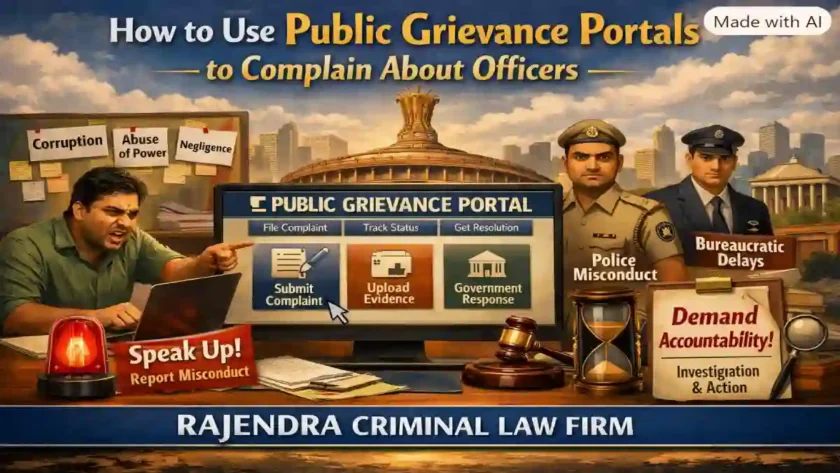
How to Use Public Grievance Portals to Complain About Officers

How to Use Public Grievance Portals to Complain About Officers

Public grievance portals offer citizens a structured route for reporting administrative failures and officer misconduct. Complaints may involve delay, corruption allegations, refusal of service, harassment, negligence, arbitrary decisions, or procedural violations. Therefore, citizens should identify the responsible department before submitting a grievance. The Centralised Public Grievance Redress and Monitoring System helps citizens approach Central Government

How to Use Public Grievance Portals to Complain About Officers Read More »

Scroll to Top