

What is Anticipatory Bail – Everything You Need to Know – Anticipatory bail protects individuals fearing arrest in non-bailable criminal allegations across India. Section 482 of BNSS governs anticipatory bail applications before competent criminal courts nationwide. Therefore, accused persons may seek judicial protection before police officers initiate custodial arrest proceedings. Courts generally examine accusation seriousness, criminal history, and investigation cooperation before granting relief. Moreover, judges consider misuse of criminal complaints during matrimonial, financial, and commercial disputes carefully. Anticipatory bail applications frequently arise from BNS offenses involving cheating, criminal breach, intimidation, and harassment allegations. Important forums include Sessions Courts, High Courts, and Special Criminal Courts handling sensitive investigations. Police stations, cybercrime cells, women police units, and economic offenses wings investigate criminal complaints regularly. Applicants may seek interim protection against coercive actions during pending anticipatory bail proceedings strategically. Furthermore, experienced criminal advocates help applicants prepare factual defenses and supporting documentary evidence carefully. Legal remedies include anticipatory bail petitions, quashing applications, writ petitions, and regular bail proceedings.
What is Anticipatory Bail? Everything You Need to Know – Rajendra Criminal Law Firm
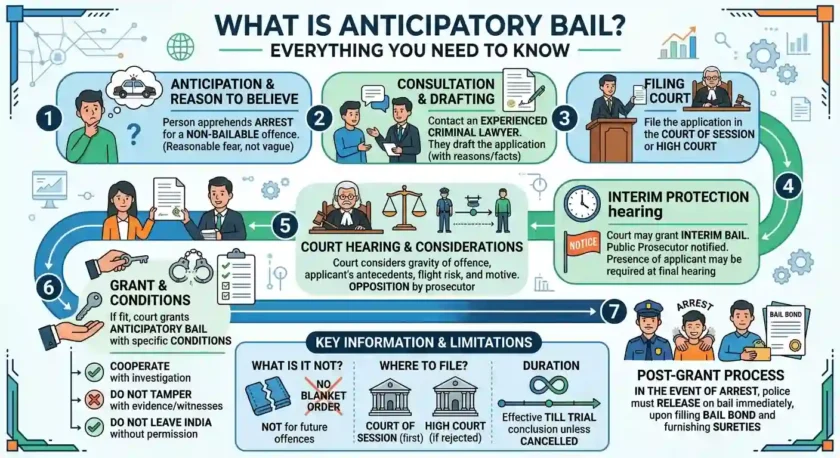
Key Objectives and Legal Importance of Anticipatory Bail
Anticipatory bail safeguards personal liberty against arbitrary arrests and motivated criminal proceedings effectively. Courts protect constitutional rights while balancing investigation interests and public justice considerations carefully. Therefore, anticipatory bail prevents unnecessary detention during preliminary investigation stages and complaint verification processes. False complaints often arise from business conflicts, matrimonial disputes, property disagreements, and employment allegations. Moreover, criminal intimidation complaints sometimes involve pressure tactics during civil and commercial litigation matters. High Courts regularly emphasize personal liberty protections under constitutional and criminal procedural jurisprudence principles. Important legal considerations include cooperation with police authorities and evidence preservation responsibilities consistently. Anticipatory bail applications commonly involve the following legal disputes:
- Dowry harassment allegations
- Financial fraud accusations
- Cybercrime complaints
- Property-related criminal disputes
- Defamation and intimidation allegations
Additionally, applicants should avoid witness interference and evidence tampering during ongoing investigations carefully. Strong legal representation significantly improves anticipatory bail outcomes before criminal courts and appellate forums.
Offenses Commonly Involving Anticipatory Bail Applications
Anticipatory bail petitions commonly arise from serious non-bailable offenses under BNS provisions nationwide. Police authorities investigate allegations involving cheating, extortion, forgery, cybercrime, and criminal intimidation offenses regularly. Therefore, accused persons often seek pre-arrest protection immediately after receiving complaint-related information strategically. Matrimonial disputes frequently generate FIRs involving dowry harassment and domestic violence allegations subsequently. Moreover, commercial disputes sometimes escalate into criminal breach of trust and fraud accusations. Economic Offenses Wings investigate corporate fraud, fake invoicing, and financial misappropriation complaints carefully. Important offenses leading to anticipatory bail proceedings include these allegations:
- Cheating and fraud offenses
- Criminal intimidation complaints
- Forgery and falsification allegations
- Cybercrime and online harassment cases
- Financial misappropriation accusations
Additionally, applicants should preserve electronic evidence and communication records supporting their legal defenses comprehensively. Early legal consultation substantially strengthens anticipatory bail strategies and procedural protections effectively.
Difference Between Anticipatory Bail and Regular Bail
Anticipatory bail differs significantly from regular bail under Indian criminal procedural frameworks and judicial interpretations. Anticipatory bail protects individuals before arrest, while regular bail follows custodial detention proceedings. Therefore, courts evaluate anticipatory bail applications with greater caution regarding investigation requirements and evidence collection. Judges examine complaint motives, accusation credibility, and applicant cooperation before granting relief carefully. Moreover, anticipatory bail usually includes conditions restricting travel and witness communication activities strategically. Regular bail proceedings generally occur after police produce accused persons before Magistrate Courts subsequently. Important distinctions between both remedies include these procedural differences:
| Anticipatory Bail | Regular Bail |
|---|---|
| Filed before arrest | Filed after arrest |
| Prevents police custody | Seeks release from custody |
| Governed under BNSS provisions | Governed under bail procedures |
| Requires apprehension of arrest | Requires actual detention |
Additionally, criminal advocates help applicants select suitable remedies according to case circumstances effectively. Strategic legal planning substantially improves liberty protections and defense preparedness during investigations.
Courts Having Jurisdiction Over Anticipatory Bail Matters
Sessions Courts and High Courts possess jurisdiction over anticipatory bail applications across Indian jurisdictions. Therefore, applicants should evaluate forum suitability according to allegation seriousness and procedural urgency carefully. Sessions Courts generally handle anticipatory bail petitions involving local criminal complaints and investigations. Moreover, High Courts examine complex matters involving constitutional rights and procedural irregularities strategically. Special Courts may supervise anticipatory bail proceedings involving corruption, narcotics, and financial crime allegations. Applicants should file petitions before courts having territorial jurisdiction over registered FIR locations appropriately. Important authorities connected with anticipatory bail matters include the following institutions:
- Local police stations
- Cybercrime police cells
- Women police stations
- Economic Offenses Wings
- Sessions Courts and High Courts
Additionally, applicants may seek interim protection during urgent hearings against immediate coercive police actions. Experienced criminal lawyers significantly improve procedural compliance and judicial presentation quality effectively.
Procedure for Filing Anticipatory Bail Applications
Applicants must follow proper procedural requirements while filing anticipatory bail petitions before competent courts nationwide. Criminal advocates usually prepare petitions detailing allegations, defenses, and procedural apprehensions comprehensively. Therefore, applicants should provide FIR copies, notices, and supporting evidence before filing petitions strategically. Courts often issue notices to public prosecutors and investigating officers during anticipatory bail proceedings. Moreover, prosecutors may oppose bail citing investigation requirements and offense gravity considerations vigorously. Applicants should cooperate with police investigations while maintaining constitutional and procedural protections carefully. Important filing documents generally include these records:
- FIR copy or complaint details
- Identity proof documents
- Supporting communication evidence
- Medical or financial records
- Affidavits and authorization documents
Additionally, courts may grant interim protection pending final anticipatory bail adjudication proceedings strategically. Timely legal action substantially prevents arrest risks and procedural complications during investigations.
Conditions Commonly Imposed in Anticipatory Bail Orders
Courts frequently impose conditions ensuring investigation cooperation and preventing misuse of anticipatory bail protections. Applicants generally must appear before investigating officers whenever authorities issue lawful notices appropriately. Therefore, courts often restrict foreign travel without prior judicial permission during ongoing investigations. Applicants should avoid contacting complainants and prosecution witnesses directly during criminal proceedings carefully. Moreover, courts may direct accused persons surrendering passports and sharing residential information with investigators. Violation of anticipatory bail conditions frequently results in cancellation applications before competent courts subsequently. Important anticipatory bail conditions include the following obligations:
- Cooperating with investigations regularly
- Avoiding witness intimidation activities
- Attending police inquiries promptly
- Informing address changes immediately
- Refraining from similar criminal conduct
Additionally, applicants should maintain respectful conduct before investigating agencies and judicial forums consistently. Careful compliance significantly protects liberty interests during pending criminal investigations and trials.
Anticipatory Bail in Matrimonial and Domestic Disputes
Matrimonial disputes generate substantial anticipatory bail litigation before Indian criminal courts regularly. Complaints involving dowry harassment, domestic violence, and cruelty allegations frequently trigger arrest apprehensions nationwide. Therefore, accused spouses and relatives often seek pre-arrest protection immediately after FIR registrations strategically. Women police stations and family counseling units investigate matrimonial complaints carefully before recommending further actions. Moreover, courts examine settlement possibilities and family dispute backgrounds during anticipatory bail hearings compassionately. Applicants should preserve financial records, communication evidence, and settlement discussions supporting their defenses comprehensively. Important matrimonial allegations commonly involve these disputes:
| Matrimonial Issue | Common Allegation | Legal Remedy |
|---|---|---|
| Dowry complaints | Cruelty allegations | Anticipatory bail |
| Financial disputes | Breach of trust claims | Quashing petitions |
| Family conflicts | Intimidation accusations | Mediation proceedings |
| Property disagreements | Harassment complaints | Settlement negotiations |
Additionally, mediation and family counseling often resolve matrimonial criminal disputes effectively. Experienced criminal lawyers substantially improve defense strategies during sensitive matrimonial investigations and proceedings.
Anticipatory Bail in Economic and Cybercrime Cases
Economic offenses and cybercrime investigations increasingly involve anticipatory bail litigation across Indian jurisdictions regularly. Authorities investigate online fraud, cryptocurrency scams, hacking, and digital financial offenses aggressively. Therefore, accused persons frequently seek anticipatory bail before cybercrime police units initiate coercive actions. Economic Offenses Wings also investigate banking fraud, corporate scams, and money laundering allegations carefully. Moreover, investigators rely upon electronic evidence, banking records, and digital communication data extensively. Applicants should preserve server logs, transaction details, and contractual documents supporting legal defenses comprehensively. Important cybercrime allegations commonly include these offenses:
- Online financial fraud
- Identity theft accusations
- Data breach complaints
- Social media harassment cases
- Cryptocurrency transaction disputes
Additionally, courts often direct applicants cooperating with digital forensic investigations and electronic evidence preservation. Strategic legal guidance substantially improves defense preparedness during cybercrime and economic offense proceedings.
Cancellation of Anticipatory Bail Orders
Courts may cancel anticipatory bail orders when applicants violate imposed conditions or obstruct investigations. Prosecutors frequently seek cancellation alleging witness intimidation, evidence tampering, or non-cooperation during investigations. Therefore, applicants should strictly comply with judicial directions and procedural requirements consistently. Courts examine post-bail conduct carefully before deciding cancellation applications filed by prosecution authorities. Moreover, complainants may oppose anticipatory bail continuation citing emerging evidence and procedural violations strategically. Applicants should avoid public statements affecting ongoing investigations or judicial proceedings unnecessarily. Important grounds supporting cancellation applications include these allegations:
- Witness intimidation activities
- Non-cooperation with investigators
- Repeated criminal conduct
- Evidence destruction attempts
- Violation of court directions
Additionally, experienced criminal advocates help applicants defend cancellation proceedings before competent judicial forums effectively. Proper legal compliance substantially strengthens continued liberty protections during criminal litigation matters.
Strategic Legal Protection Through Anticipatory Bail Remedies
Anticipatory bail represents an essential constitutional safeguard within Indian criminal justice administration frameworks nationwide. Therefore, individuals facing false allegations should seek timely legal advice and procedural protection immediately. Courts balance personal liberty with investigation interests while deciding anticipatory bail applications carefully. Moreover, judicial precedents emphasize fairness, transparency, and constitutional protections during criminal procedural proceedings consistently. Applicants should maintain documentary evidence supporting innocence and procedural cooperation throughout investigations strategically. Criminal litigation frequently involves police stations, cybercrime units, women cells, and economic investigation departments regularly. Important legal remedies associated with anticipatory bail include these proceedings:
| Legal Remedy | Purpose | Forum |
|---|---|---|
| Anticipatory bail | Prevent arrest | Sessions Court |
| Regular bail | Secure release | Magistrate Court |
| Quashing petition | Cancel FIR | High Court |
| Writ petition | Constitutional protection | High Court |
Additionally, strategic legal representation significantly improves procedural safeguards and litigation outcomes effectively.
Role of Criminal Lawyers During Anticipatory Bail Proceedings
Criminal advocates provide strategic legal protection during anticipatory bail investigations and judicial proceedings nationwide consistently. Lawyers analyze FIR allegations, procedural irregularities, and evidentiary weaknesses before preparing defense strategies carefully. Therefore, applicants should engage experienced criminal advocates immediately after learning potential arrest risks strategically. Defense lawyers also coordinate with investigating agencies regarding notice appearances and procedural cooperation requirements. Moreover, advocates draft anticipatory bail petitions highlighting constitutional protections and factual defense narratives effectively. Courts often consider applicant conduct and legal submissions during anticipatory bail adjudication proceedings carefully. Important legal services generally include these professional activities:
- Drafting anticipatory bail petitions
- Preparing supporting affidavits
- Coordinating police appearances
- Defending cancellation proceedings
- Filing writ and quashing petitions
Additionally, legal representation substantially reduces procedural mistakes and adverse litigation consequences during criminal investigations effectively.
Constitutional Rights and Liberty Protections
Constitutional protections strongly influence anticipatory bail jurisprudence and criminal procedural safeguards across India consistently. Courts regularly emphasize personal liberty and protection against arbitrary detention during criminal investigations strategically. Therefore, judges examine allegations carefully before permitting custodial interrogations and coercive police actions unnecessarily. High Courts and Supreme Court precedents guide anticipatory bail interpretation and procedural fairness standards nationwide. Moreover, applicants may challenge unlawful arrests through writ petitions and constitutional remedies effectively. Police authorities must comply with BNSS safeguards and arrest-related procedural requirements consistently. Important constitutional protections include these legal rights:
- Protection against arbitrary arrest
- Right to legal representation
- Fair investigation procedures
- Judicial oversight protections
- Liberty under constitutional principles
Additionally, applicants should document procedural violations supporting future constitutional challenges and legal remedies comprehensively. Strong constitutional jurisprudence substantially strengthens anticipatory bail protections and procedural fairness nationwide.
Practical Tips Before Seeking Anticipatory Bail
Applicants should adopt strategic precautions before filing anticipatory bail applications before competent criminal courts nationwide. Individuals must avoid absconding behaviors and unnecessary confrontations with complainants or investigators during disputes. Therefore, applicants should collect supporting documents, communication records, and witness details immediately after allegations emerge strategically. Criminal advocates often recommend preserving electronic evidence and transaction histories supporting factual defenses comprehensively. Moreover, applicants should avoid social media statements affecting pending investigations and judicial proceedings unnecessarily. Courts generally appreciate transparent conduct and investigation cooperation during anticipatory bail hearings consistently. Important practical precautions include these preventive actions:
- Preserve electronic communications carefully
- Avoid threatening complainants directly
- Respond lawfully to notices
- Maintain accurate address information
- Consult criminal lawyers immediately
Additionally, applicants should attend scheduled hearings and police inquiries responsibly during ongoing investigations. Preventive legal preparation substantially improves anticipatory bail success and procedural protections effectively.
Importance of Evidence Under Bharatiya Sakshya Adhiniyam
Evidence plays a crucial role during anticipatory bail hearings and subsequent criminal proceedings nationwide consistently. Bharatiya Sakshya Adhiniyam governs admissibility and evaluation of documentary and electronic evidence strategically. Therefore, applicants should preserve call records, emails, CCTV footage, and transaction details carefully. Courts examine evidentiary reliability while evaluating false implication claims and investigation requirements comprehensively. Moreover, digital evidence frequently influences cybercrime, financial fraud, and matrimonial dispute investigations significantly. Applicants should maintain authentic documents preventing allegations involving evidence manipulation or fabrication subsequently. Important evidence categories commonly include these materials:
| Evidence Type | Relevance | Common Use |
|---|---|---|
| Electronic records | Digital communication proof | Cybercrime cases |
| Financial documents | Transaction verification | Fraud investigations |
| CCTV footage | Location confirmation | Criminal defenses |
| Medical records | Injury verification | Assault allegations |
Additionally, strategic evidence management substantially strengthens anticipatory bail defenses and future criminal litigation outcomes effectively.
Emerging Trends in Anticipatory Bail Litigation
Anticipatory bail jurisprudence continues evolving through judicial precedents and modern investigative challenges nationwide consistently. Courts increasingly address cybercrime, digital evidence, and online harassment allegations during anticipatory bail proceedings. Therefore, applicants require technologically informed legal strategies and evidence preservation mechanisms strategically. High Courts regularly interpret constitutional protections regarding arrests, investigations, and procedural fairness obligations comprehensively. Moreover, economic offenses and corporate fraud investigations involve increasingly complex anticipatory bail litigation nationwide. Police departments also utilize forensic technologies and surveillance systems during criminal investigations extensively. Important emerging legal trends include these developments:
- Digital evidence-focused investigations
- Increased cybercrime anticipatory bail petitions
- Greater constitutional rights scrutiny
- Expanded forensic investigation methods
- Faster online court hearing systems
Additionally, experienced criminal lawyers help applicants navigate evolving legal standards and technological challenges effectively. Strategic legal preparation ultimately protects personal liberty and procedural rights during criminal investigations comprehensively.
FAQs on Anticipatory Bail
What is anticipatory bail under BNSS?
Anticipatory bail protects individuals from arrest before police custody in non-bailable criminal allegations and investigations.
Which court grants anticipatory bail in India?
Sessions Courts and High Courts grant anticipatory bail under BNSS procedural and constitutional legal protections.
Can police arrest after anticipatory bail approval?
Police generally cannot arrest applicants after valid anticipatory bail orders unless courts cancel granted protections.
Which offenses commonly involve anticipatory bail petitions?
Cheating, dowry harassment, cybercrime, intimidation, fraud, and financial misappropriation allegations commonly involve anticipatory bail.
Can anticipatory bail orders face cancellation?
Courts may cancel anticipatory bail for witness intimidation, evidence tampering, or investigation non-cooperation violations.
Why should accused persons hire criminal lawyers immediately?
Experienced criminal lawyers protect constitutional rights, prepare defenses, and improve anticipatory bail success during investigations.
Read More
- Legal Defences Against a Theft Charge in India
- How to File a Criminal Complaint in Chennai: A Step-by-Step Guide
- Difference Between Civil and Criminal Law in India
- What is the Punishment for Assault under the IPC?
- Murder & Attempt to Murder Charges in India: Laws & Defences
- Department of Justice – Government of India