
Excessive Maintenance Orders – Family disputes sometimes reach the courts when spouses separate or face serious marital conflicts. One of the most common legal issues in such situations is the question of maintenance. Maintenance refers to the financial support that one spouse is legally required to provide to the other spouse, children, or dependent parents who are unable to maintain themselves.
Indian law recognizes that individuals who are financially dependent should not be left without support. Therefore, courts have the power to order maintenance payments to ensure basic living needs are met. However, in some cases, a party may feel that the maintenance amount ordered by the court is unfair or excessive.
When such concerns arise, the law provides remedies through appellate procedures. With the introduction of the Bharatiya Nagarik Suraksha Sanhita (BNSS), which replaced the older criminal procedure framework, maintenance proceedings and appeals continue to play an important role in family law disputes.
At Rajendra Criminal Law Firm, we assist individuals who seek legal remedies against unfair or excessive maintenance orders. This article explains how maintenance orders work and what appellate options are available under the BNSS.
Excessive Maintenance Orders: Appellate Remedies Under BNSS – Rajendra Criminal Law Firm
Understanding Maintenance Under Indian Law
Maintenance is a legal obligation imposed by the court to ensure that a dependent person receives financial support. The law aims to prevent destitution and provide basic financial security.
Maintenance claims are often filed by:
- Wives who are unable to support themselves
- Children who require financial assistance
- Parents who depend on their children for support
These claims are typically filed before a magistrate, who examines the financial conditions of the parties before determining the maintenance amount.
The court considers several factors while deciding maintenance, including the income of the parties, the needs of the applicant, and the standard of living enjoyed during the marriage.
Purpose of Maintenance Orders
Maintenance orders are intended to ensure fairness and social justice. They are not meant to punish one party but to provide financial stability to those who depend on others for survival.
For example, if a spouse has no independent income, the court may direct the financially stronger spouse to provide monthly maintenance.
Similarly, children who are studying or unable to earn may receive maintenance from their parents.
While the objective is to ensure support, the court must also ensure that the amount fixed is reasonable and proportionate to the income of the paying party.
When Maintenance Orders May Become Excessive
Although courts carefully examine the facts before issuing maintenance orders, there are situations where the paying party may believe that the order is excessive or unrealistic.
Such concerns may arise due to several reasons.
Incorrect Assessment of Income
Sometimes the court may rely on incorrect assumptions regarding the income of the paying party. If the income is overestimated, the maintenance amount may become unmanageable.
Change in Financial Circumstances
Financial situations can change over time. Loss of employment, business losses, or health problems may affect the paying party’s ability to comply with the maintenance order.
Failure to Consider Relevant Evidence
In some cases, the court may not fully consider relevant evidence regarding expenses, liabilities, or the earning capacity of the claimant.
Multiple Financial Obligations
A person may have other responsibilities such as supporting older parents or children from another marriage. If these obligations are not properly considered, the maintenance amount may appear excessive.
When such situations occur, the law provides remedies through appeals or revisions.
Introduction to the Bharatiya Nagarik Suraksha Sanhita (BNSS)
The Bharatiya Nagarik Suraksha Sanhita represents the modern framework governing criminal procedure in India. It replaced the older procedural code with updated provisions aimed at improving efficiency and fairness in the justice system.
Under this legal framework, magistrates continue to have the authority to hear maintenance claims and pass appropriate orders.
However, if a party believes that the order is unjust or excessive, the law allows them to challenge the decision before higher courts.
These appellate remedies help ensure that justice is balanced and that both parties receive fair treatment.
Appellate Remedies Against Maintenance Orders
A person who is dissatisfied with a maintenance order can seek relief through various legal remedies.
Filing a Revision Petition
One of the most common remedies is filing a revision petition before the Sessions Court or the High Court.
Through this petition, the aggrieved party can request the higher court to review the legality, correctness, or propriety of the magistrate’s order.
The court may modify, reduce, or set aside the maintenance amount if it finds that the order was unreasonable or unsupported by evidence.
Challenging the Order Before the High Court
In certain situations, the aggrieved party may approach the High Court directly. The High Court has supervisory powers over lower courts and can examine whether the order violates legal principles.
If the court finds serious errors or injustice, it may intervene and modify the maintenance order.
Seeking Modification of Maintenance
Apart from appeals, the paying party may also apply for modification of the maintenance order if there is a significant change in circumstances.
For example, loss of income or new financial responsibilities may justify reduction of the maintenance amount.
The court will examine the updated financial situation before making any changes.
Factors Considered by Appellate Courts
When reviewing maintenance orders, appellate courts consider several important factors.
Financial Capacity of the Paying Party
The court examines the actual income, assets, and financial obligations of the person required to pay maintenance.
Needs of the Claimant
The court also evaluates the genuine needs of the spouse or dependent seeking maintenance.
Standard of Living
Courts often consider the standard of living that the parties enjoyed during the marriage.
Evidence Presented
Proper documentation and evidence play a crucial role in appellate proceedings. Income records, financial statements, and expense details help the court reach a fair decision.
Importance of Legal Representation
Challenging a maintenance order requires careful legal strategy and proper documentation. Without professional assistance, it may be difficult to present a strong case before the court.
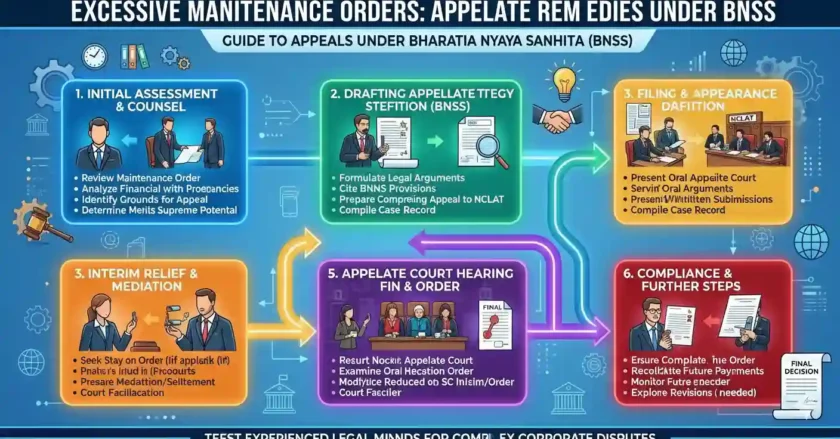
Experienced lawyers assist clients by:
- Reviewing the original maintenance order
- Analyzing financial records and evidence
- Preparing legal petitions and arguments
- Representing clients before appellate courts
Effective legal representation ensures that the client’s rights are protected throughout the legal process.
Preventing Maintenance Disputes
Although legal remedies exist, it is always better to resolve maintenance matters amicably when possible.
Open communication and fair negotiation between spouses can sometimes prevent lengthy litigation.
Mediation and settlement discussions may also help parties reach mutually acceptable solutions.
However, if negotiations fail or the order appears unjust, legal remedies remain available.
How Rajendra Criminal Law Firm Assists Clients
At Rajendra Criminal Law Firm, we understand that maintenance disputes can be emotionally and financially challenging.
Our legal team provides comprehensive assistance in matters involving maintenance orders and appellate remedies.
Our services include:
- Legal consultation on maintenance disputes
- Filing revision petitions against excessive maintenance orders
- Representation before Sessions Courts and High Courts
- Assistance in modification of maintenance orders
- Strategic legal advice for family-related criminal proceedings
We carefully analyze each case and develop strong legal arguments to protect our clients’ interests.
Importance of Acting Promptly
Legal remedies against maintenance orders must be pursued within specific time limits.
Delay in filing an appeal or revision petition may weaken the case or even result in dismissal.
Therefore, individuals who believe that a maintenance order is excessive should seek legal advice immediately.
Prompt action allows lawyers to prepare the necessary documents and present a strong case before the court.
Frequently Asked Questions
A maintenance order is a legal direction issued by a magistrate requiring a person to provide financial support to a dependent spouse, child, or parent who cannot maintain themselves. Under the Bharatiya Nagarik Suraksha Sanhita, courts aim to ensure that financially dependent individuals receive basic support for their living expenses.
A maintenance order may be considered excessive if the amount fixed by the court is beyond the paying party’s actual financial capacity. This situation may arise when the court overestimates the person’s income or does not consider financial obligations such as debts, medical expenses, or responsibilities toward other dependents.
If a person believes that a maintenance order is unfair or excessive, they can challenge it through legal remedies such as filing a revision petition before the Sessions Court or the High Court.
Yes, maintenance orders can be modified if there is a significant change in circumstances. For example, if the paying party loses employment, suffers a financial loss, or develops serious health issues, they may request the court to reduce the maintenance amount. Similarly, if the financial needs of the claimant increase, the court may revise the amount accordingly. The court will examine evidence from both parties before making any modifications.
A lawyer plays an important role in analyzing the maintenance order and identifying legal grounds for challenge. The lawyer collects financial records, prepares legal petitions, and presents arguments before appellate courts.
Conclusion
Maintenance laws play a vital role in protecting financially dependent individuals and ensuring social justice. At the same time, courts must balance this objective with fairness toward the person required to pay maintenance.
When a maintenance order appears excessive or unrealistic, the legal system provides remedies through appeals and revisions. The framework established under the Bharatiya Nagarik Suraksha Sanhita ensures that such disputes can be reviewed and corrected by higher courts. However, navigating these legal procedures requires careful preparation and professional legal guidance.
At Rajendra Criminal Law Firm, we are committed to assisting clients in challenging unfair maintenance orders and protecting their legal rights. Through experienced legal representation and strategic advocacy, we strive to achieve fair and balanced outcomes in maintenance disputes.
Read More
- Interim Maintenance Challenge in High Court – Legal Remedies After BNSS
- Appeal Against Maintenance Order: BNSS vs Old CrPC Explained (BNSS Chapter on Maintenance vs Section 125 CrPC)
- Understanding the NDPS Act: Defence Strategies for Drug Cases
- Your Rights After an Arrest in India: A Step-by-Step Legal Guide
- How to Fight a Cheque Bounce Case: A Guide to Section 138 NI Act
- Ministry of Home Affairs – Government of India